She was twelve and on a vacation at her ancestral
home in Hyderabad, India. It was when her aunt realized her boredom and
disorientation within the bungalow that she pulled a few sheets over and
around her bed, strung fairy lights across, and built her a pillowfort as a surprise. Overjoyed beyond belief, she camped in there for days altogether. She even let her tiny brother into her fortress; It was their kingdom one day, and a
battleground on the other.
It fascinated her how all it took to belong to a
place was a story to call her own.
As
she grew older and into her profession as an architect, she wondered how the pillow
fort still maintained its magic, not just for her but for people of all ages and
all across the world, through all these years. Isn't
it mind-blowing, that a construction such as a pillow-fort, so open-ended and
incomplete, could bring so much joy- That there is no right way for it be, it
just is and it still makes someone, somewhere feel safe and heard?
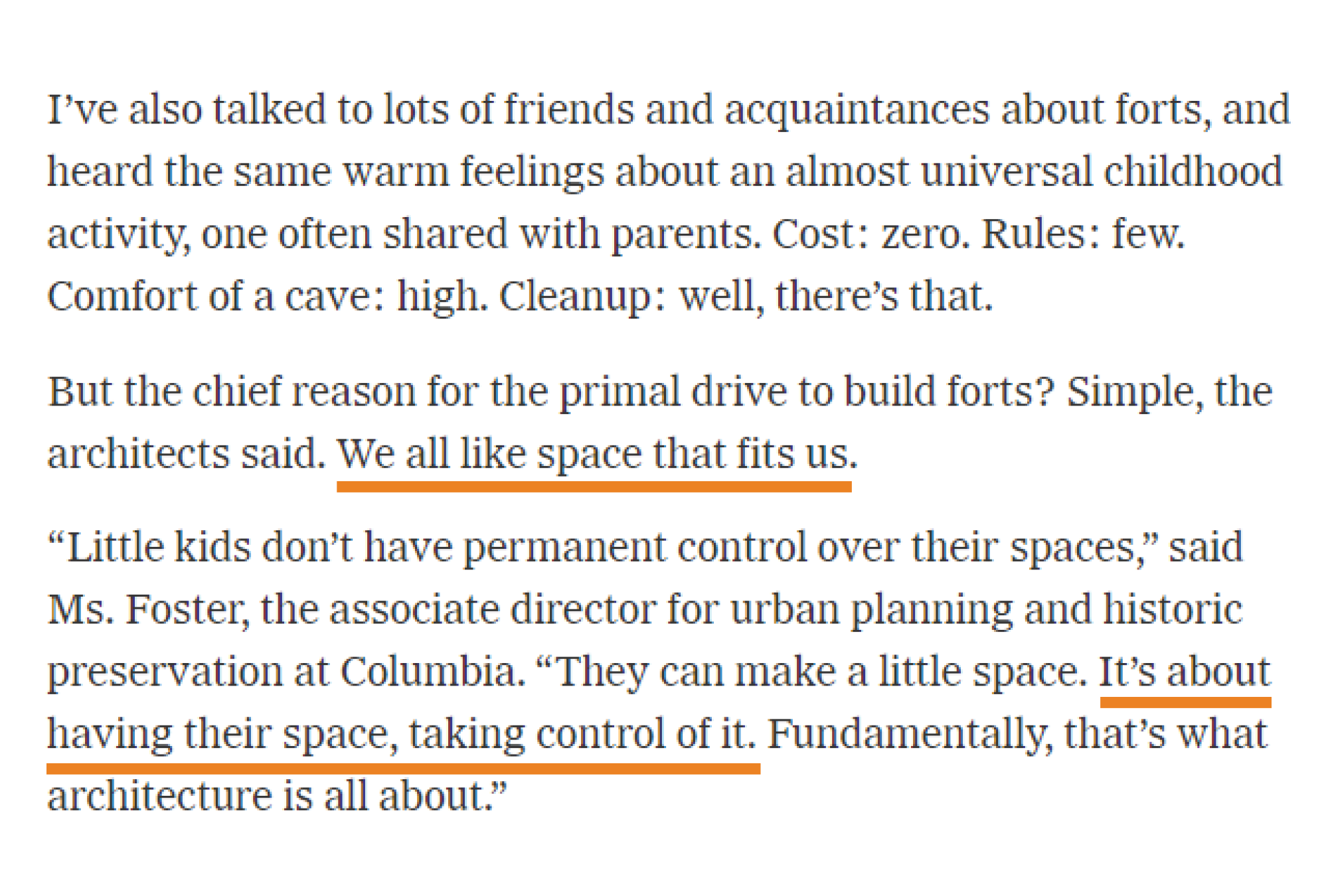
Richtel, Matt. “And the Walls Came Tumbling Down, Again”
New York Times, April 18, 2012.
New York Times, April 18, 2012.
To
understand our amusement with pillow-forts, Matt Richtel, an acclaimed New York
Times writer, reasons, “We all like space that
fits us”. If that is so, what goes amiss in the spaces we design today?
Do we laud the built space over the narrative, creating a protagonist out of
the space instead of the person, pushing a generalized function for all to
follow?
It makes her question, 'Can I design
spaces that mould themselves to the multiple intersecting narratives of anyone
who stumbles upon it, and can I make their story stand out? Can I bring back
the magic and wonder?
She started her journey at RISD with that same idea of building pillow-forts- facilitating open-ended environments to create spaces that fit and which elicit childlike joy and wonder. Throughout her time here, she has tried to define it, understand it, unravel it and be inspired by it.
︎︎︎
Sample this mind-map from 2021 where she tried to understand the spatial logic of the pillowfort that could be emulated in the built environment. 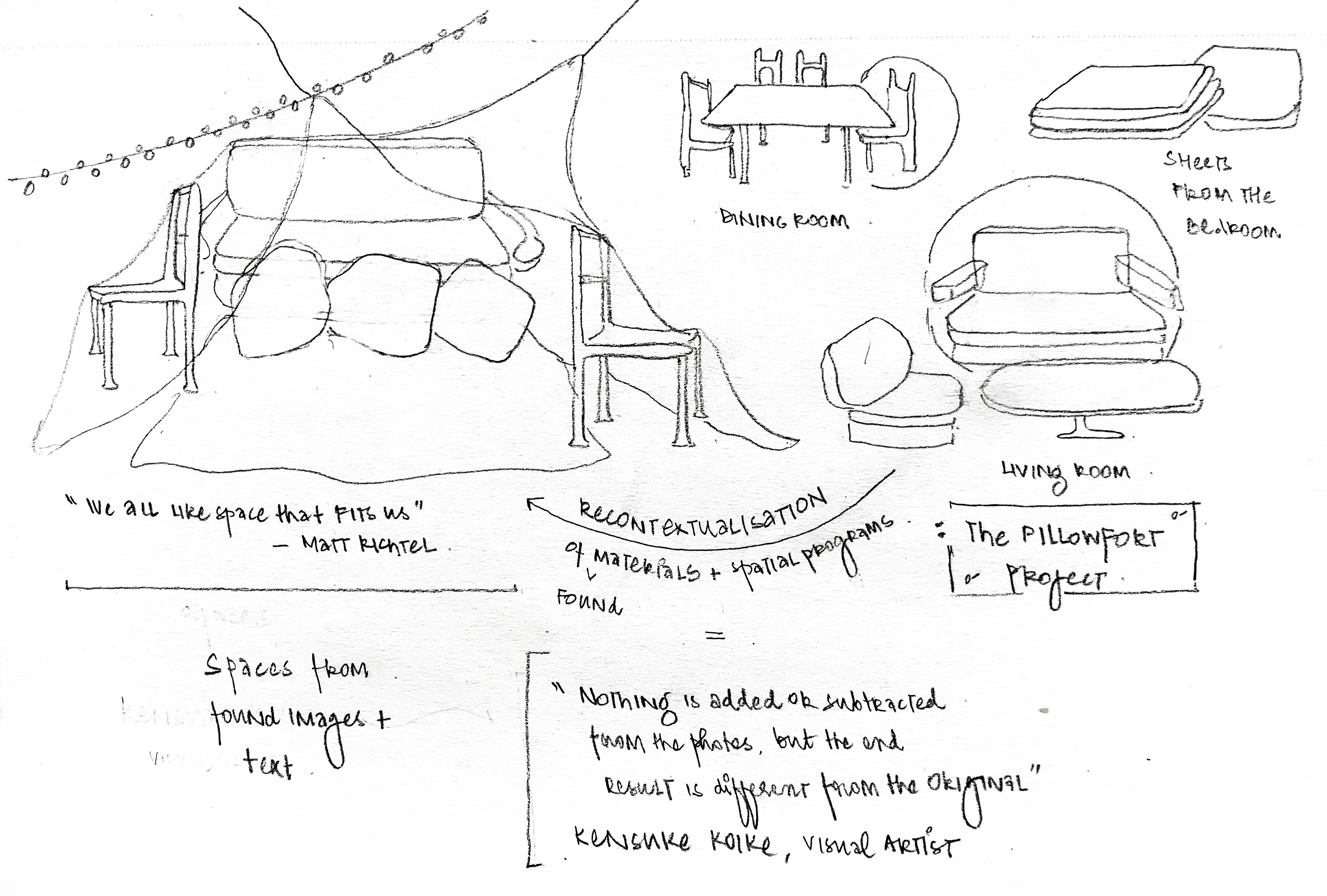
She wondered how she could expand on this magic and sense of wonder that she felt as a child, that she still feels when she builds a pillowfort in her room. Could this story become real?
She then took this seedling of thought to the city and wrote an investigative statement about what the principles of a pillowfort could imply outside of the domestic space- and with the help of a very supportive community at RISD, she arrived at her first research question- how can we soften a place?
In an illustration course, she took cues from the work of Kensuke Koike, a visual artist known for the way he creates new images by repurposing them, and used the technique of kirigami to create spatial conditions out of surfaces- much the way a pillowfort is created out of recontextualising materials and spatial programs.
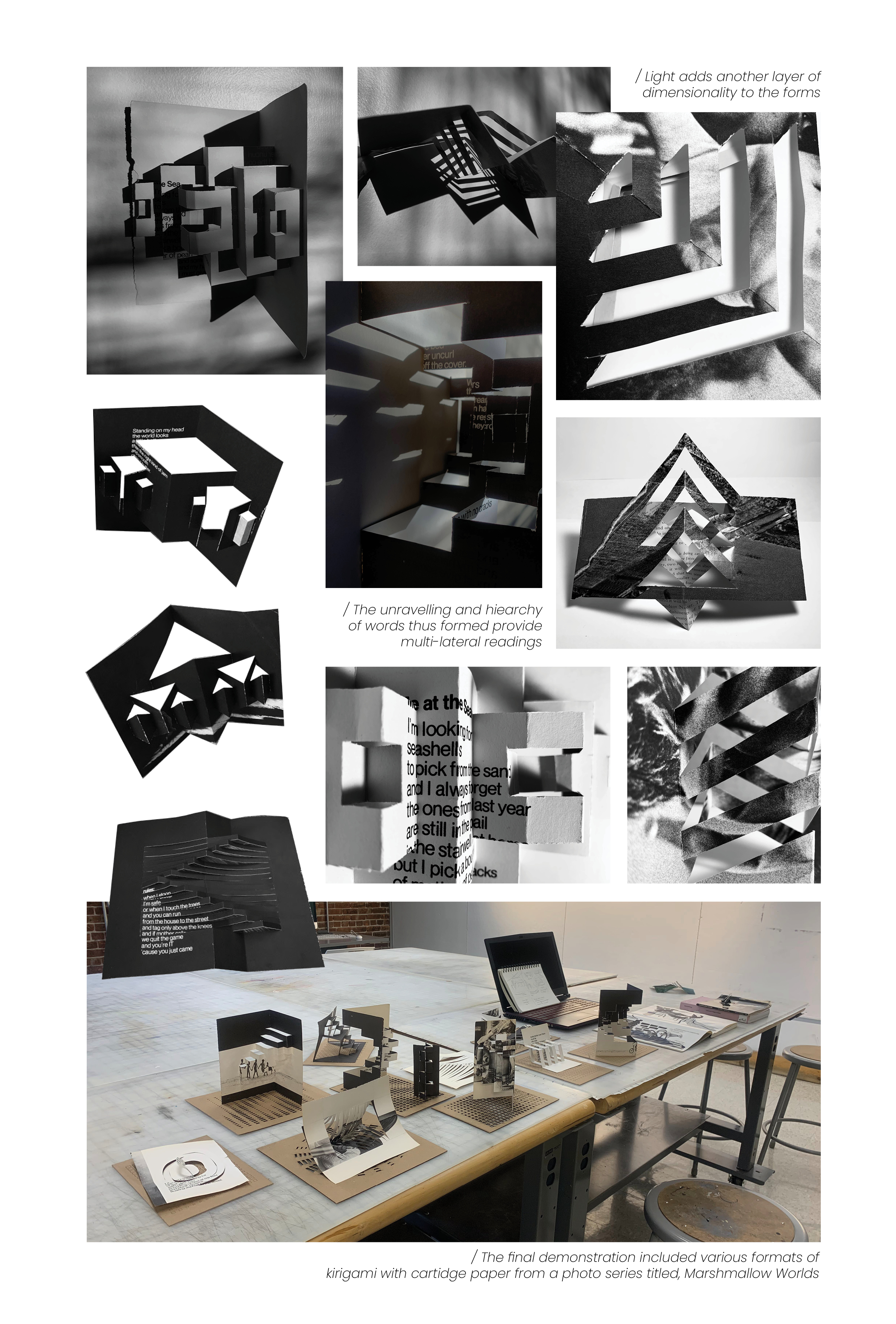
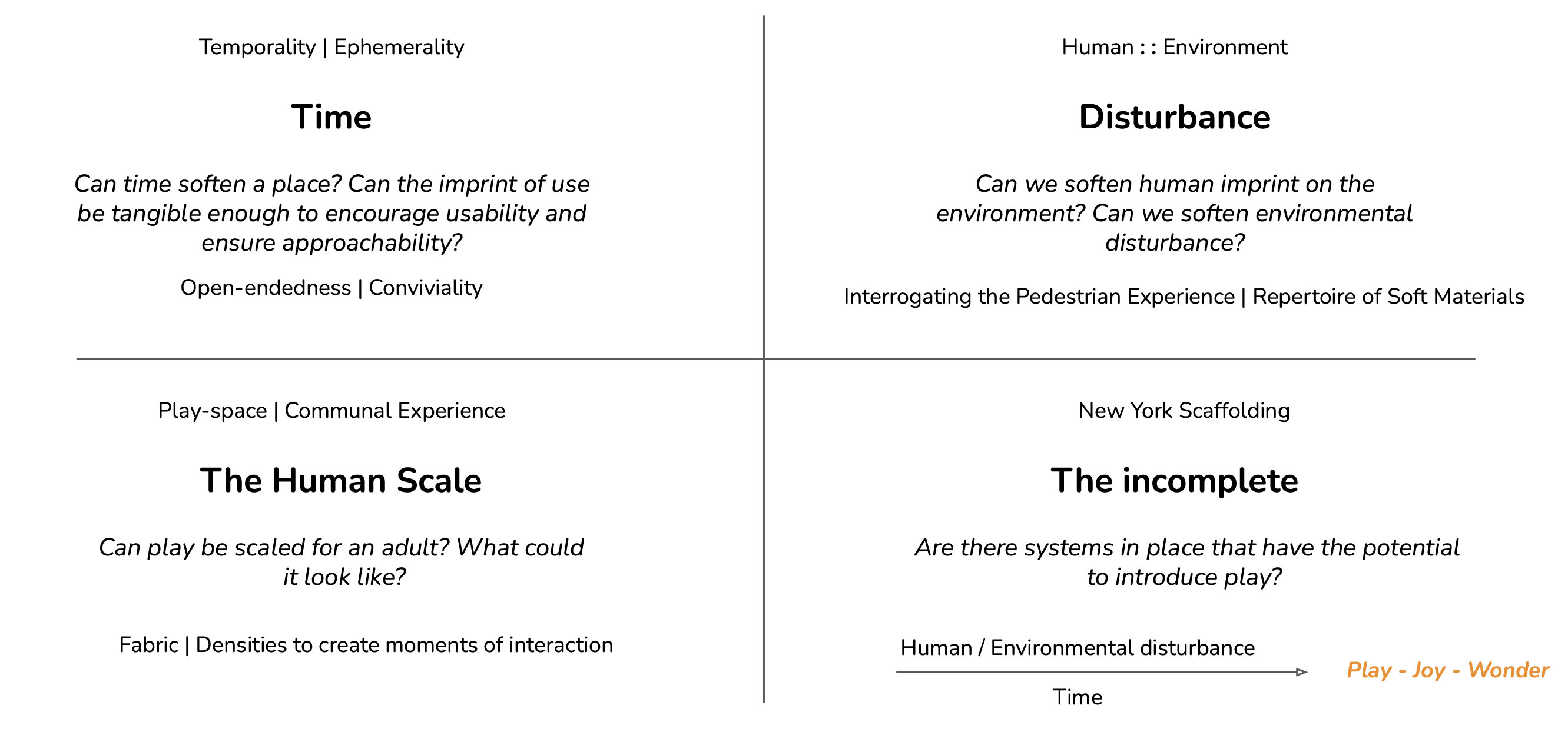
She prototyped a catalogue of softnesses in the built environment, as shown above.
She spent all of the two years at school disentangling the pillowfort in an attempt to derive a hypothesis that could potentially change the way we build places. Her graduate thesis, making pla(y)ces, is a story spun from this very idea.
![]()
![]()
![]()
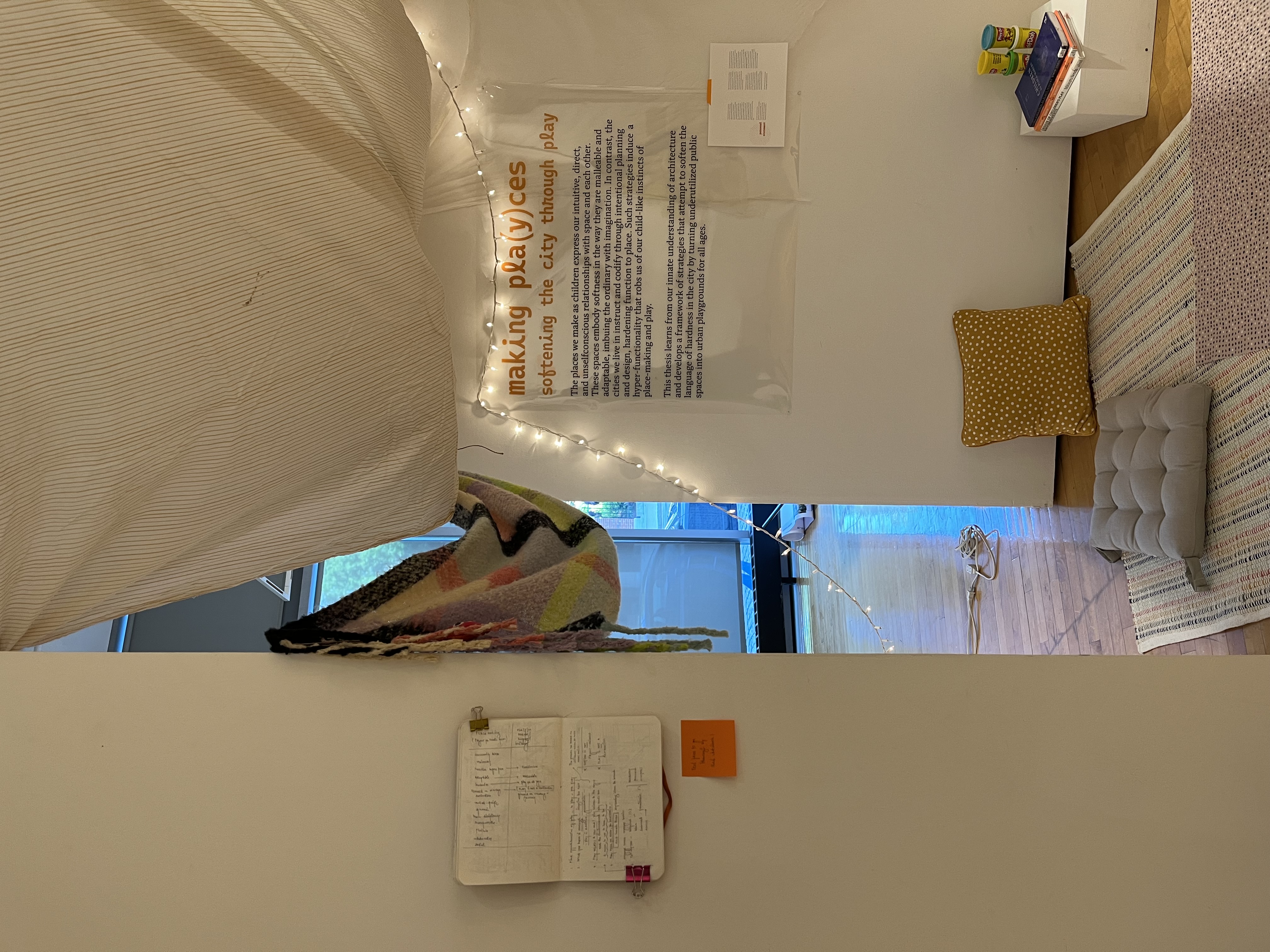
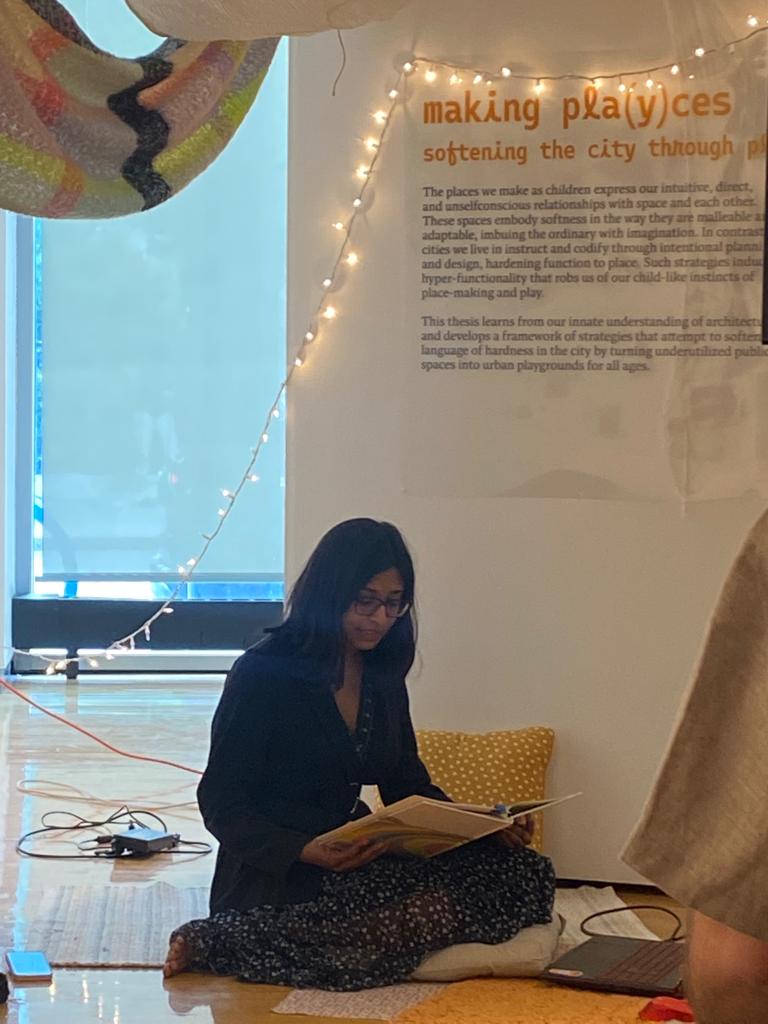
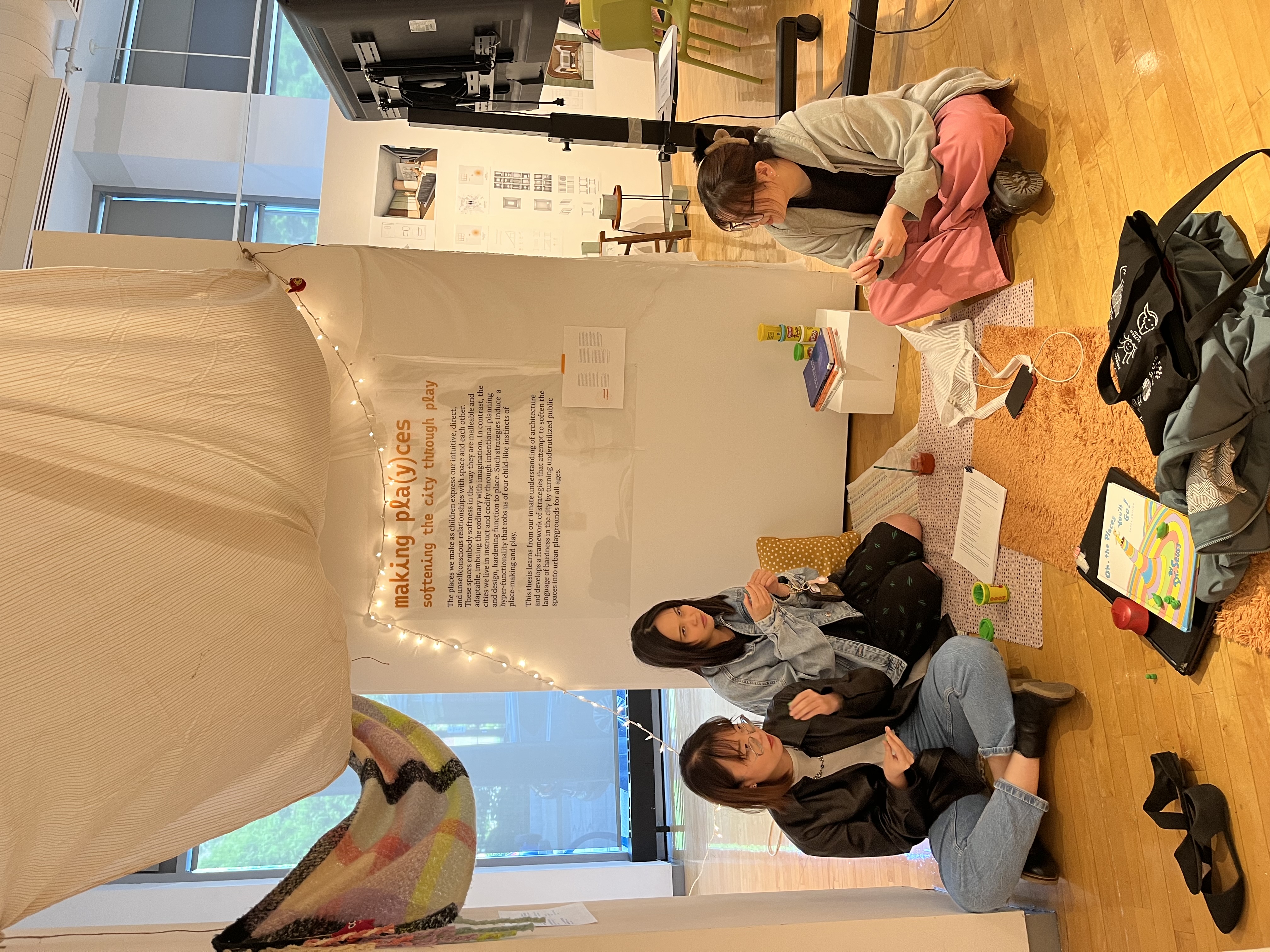
Yes, she built a pillowfort for her thesis presentation :)