people make pla(y)ces
urban design - public space design - exhibition
making pla(y)ces: Softening the city through play
Graduate Thesis at Rhode Island School of Design, 2023
Cities that grow naturally over time integrate spaces of gathering that allow for serendipitous happenstance. However, the cities we design today instruct and codify through intentional planning and design; they assign use, hardening specific function to place. Such strategies lead to spaces devoid of spirit, inculcating in city-dwellers to a sense
of disconnect from the city.
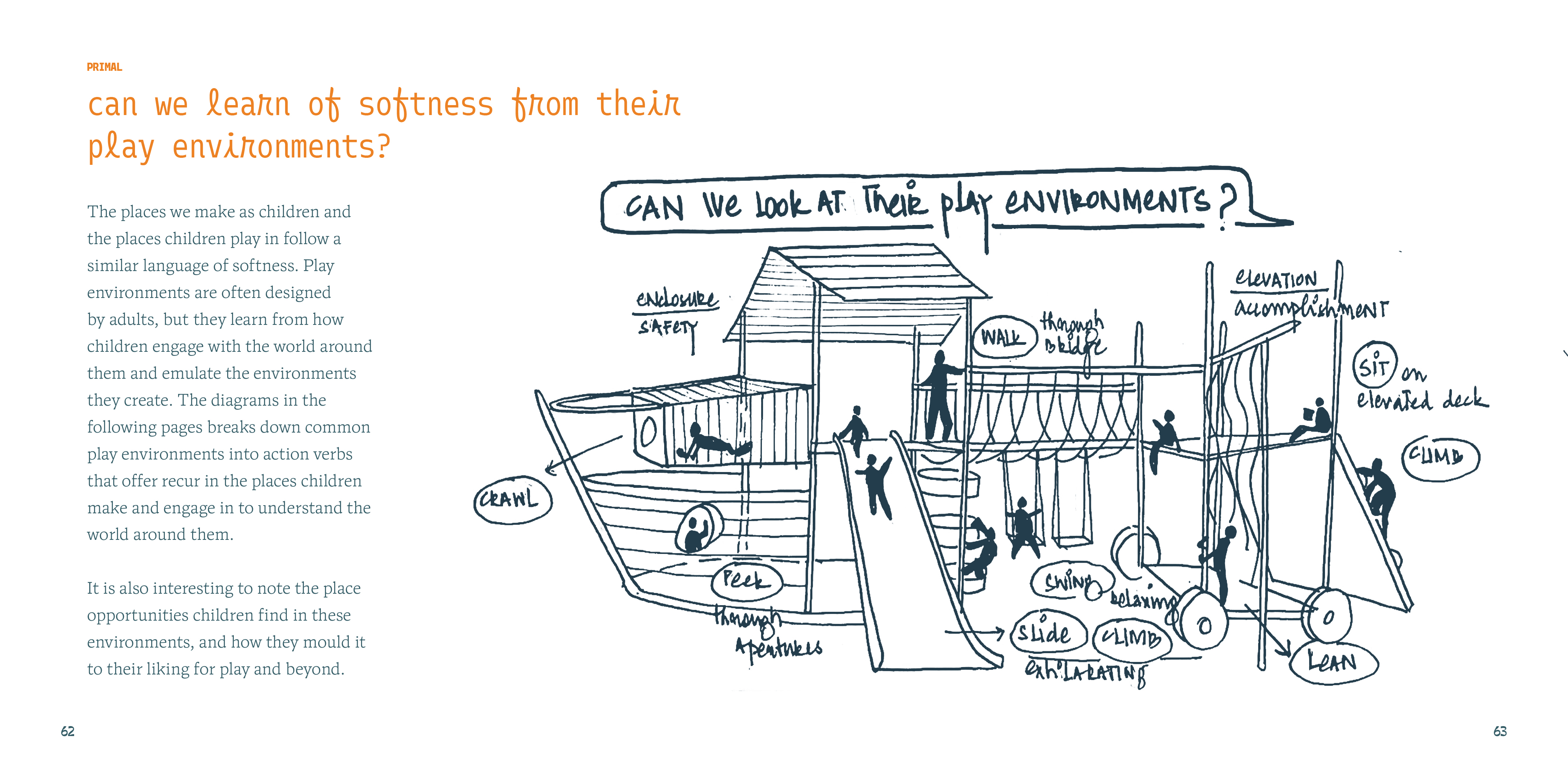
In contrast to this, the places we make as children, express our intuitive, direct and unselfconscious relationships with space and one other. These spaces embody softness through their malleability and adaptability, borrowing from the world around them and imbuing the ordinary with imagination. Children’s sense of place-making stems from a language of architecture inherent to us all through our instinctive understanding of object and space. The hyper-functionality of the public space in the city robs us not only of our agency in the city but also of this child-like instinct toward place-making and play.
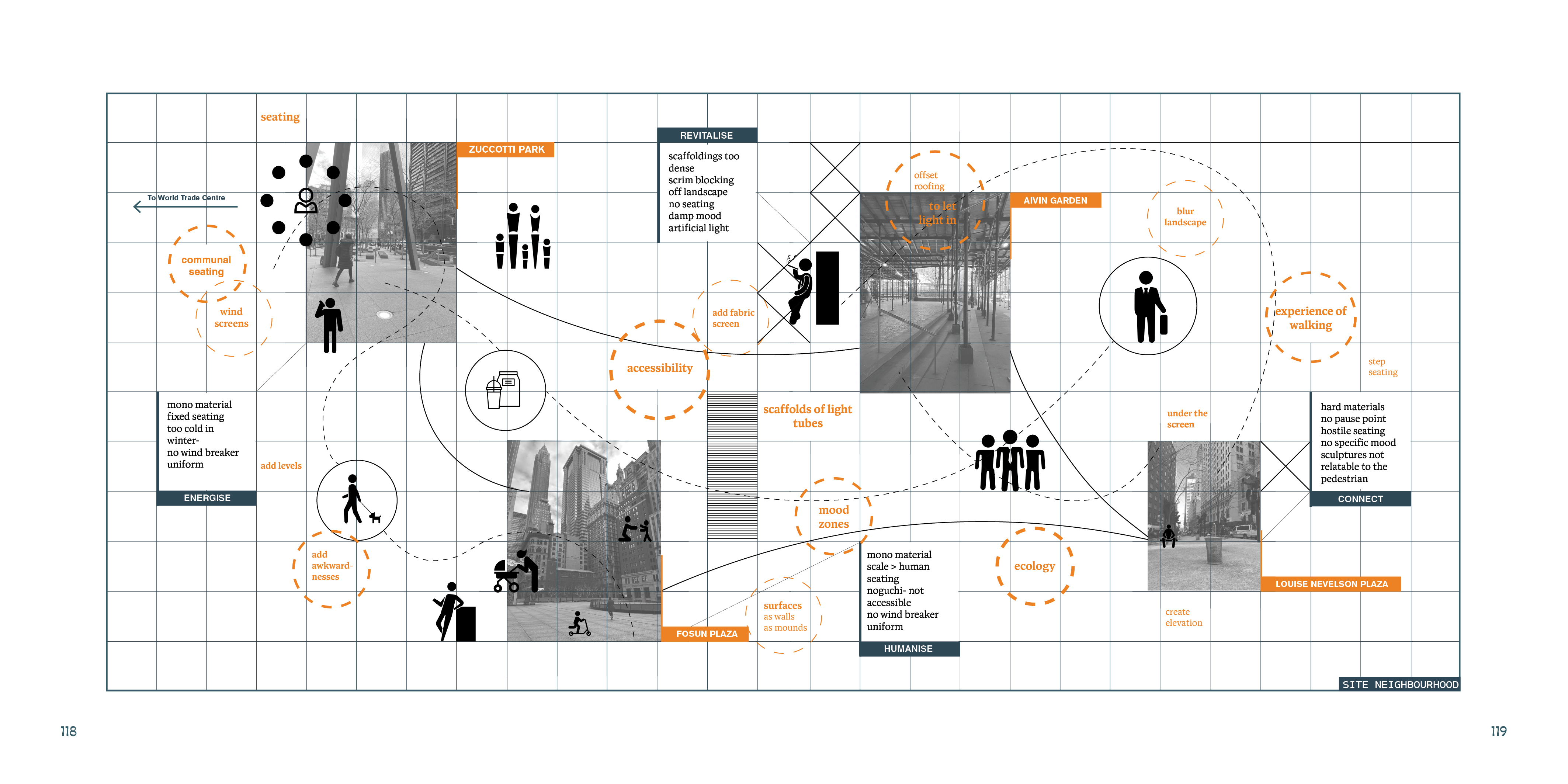
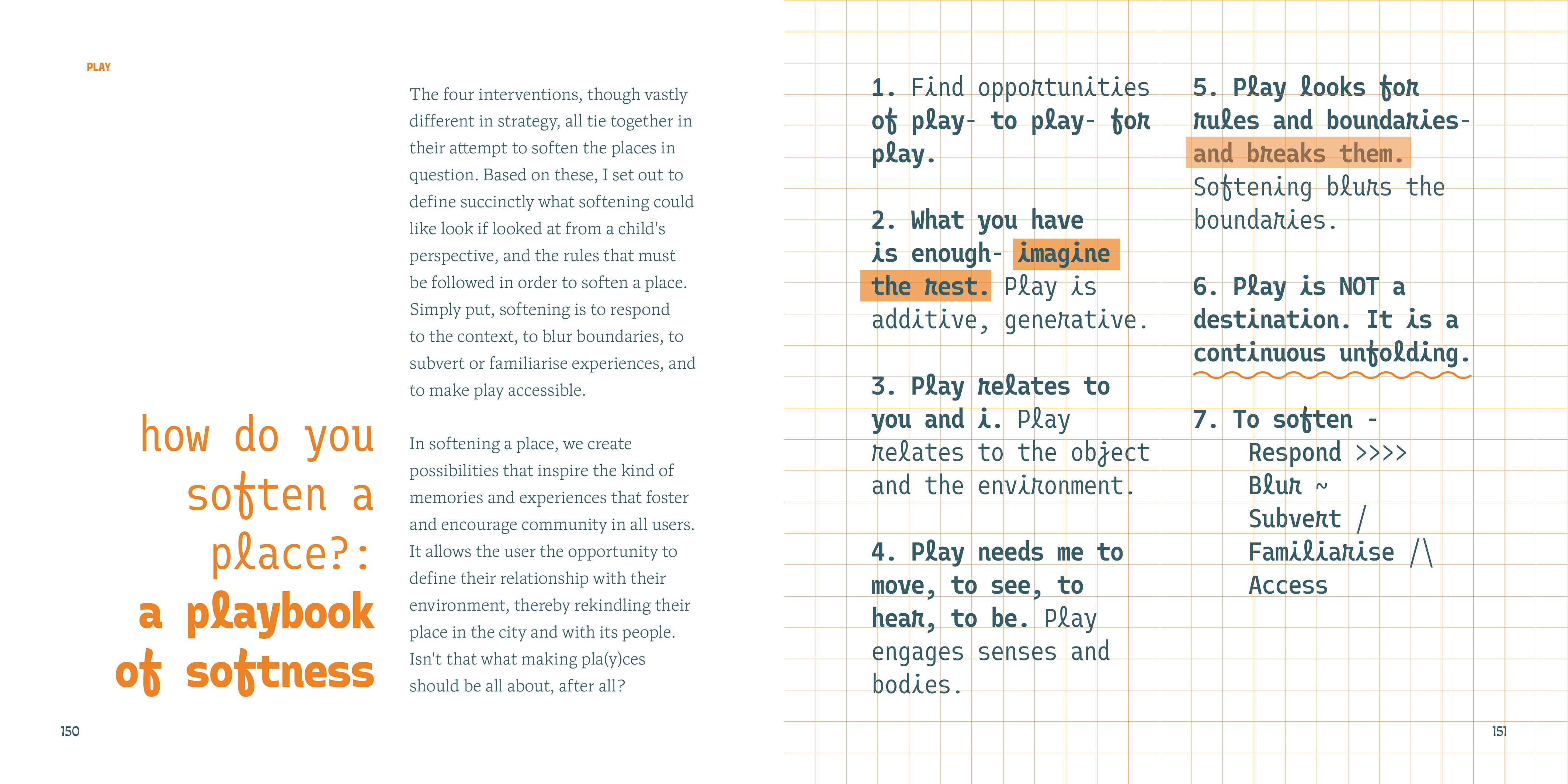
This thesis learns from our innate understanding of architecture and develops a framework of strategies that attempt to soften the language of hardness in the city by turning underutilized public spaces into urban playgrounds for all ages. Through the transformation of a network of Privately Owned Public Spaces (POPS) in Lower Manhattan, New York City, a genre of public space that exemplify bland urban sameness ubiquitous to the cities of today, this thesis introduces a vocabulary of softness that positions the child as the user and designer. A series of site-specific interventions that trigger the kind of memories and experiences that foster and encourage community and a sense of place in all users. This softness rekindles our relationship with the city and its people. The framework explores materials, surfaces, experiences and systems intended as a response to hardnesses in the cityscape. The framework adds to the malleability of places and encourages intuitive use for the city dweller. It also offers guidelines that critique and drive the scope of future public space designs.
program graduate thesis project
advisors Dr Barbara Stehle, Ellen Garrett, Lindsay Harkema
place New York City, NY, US
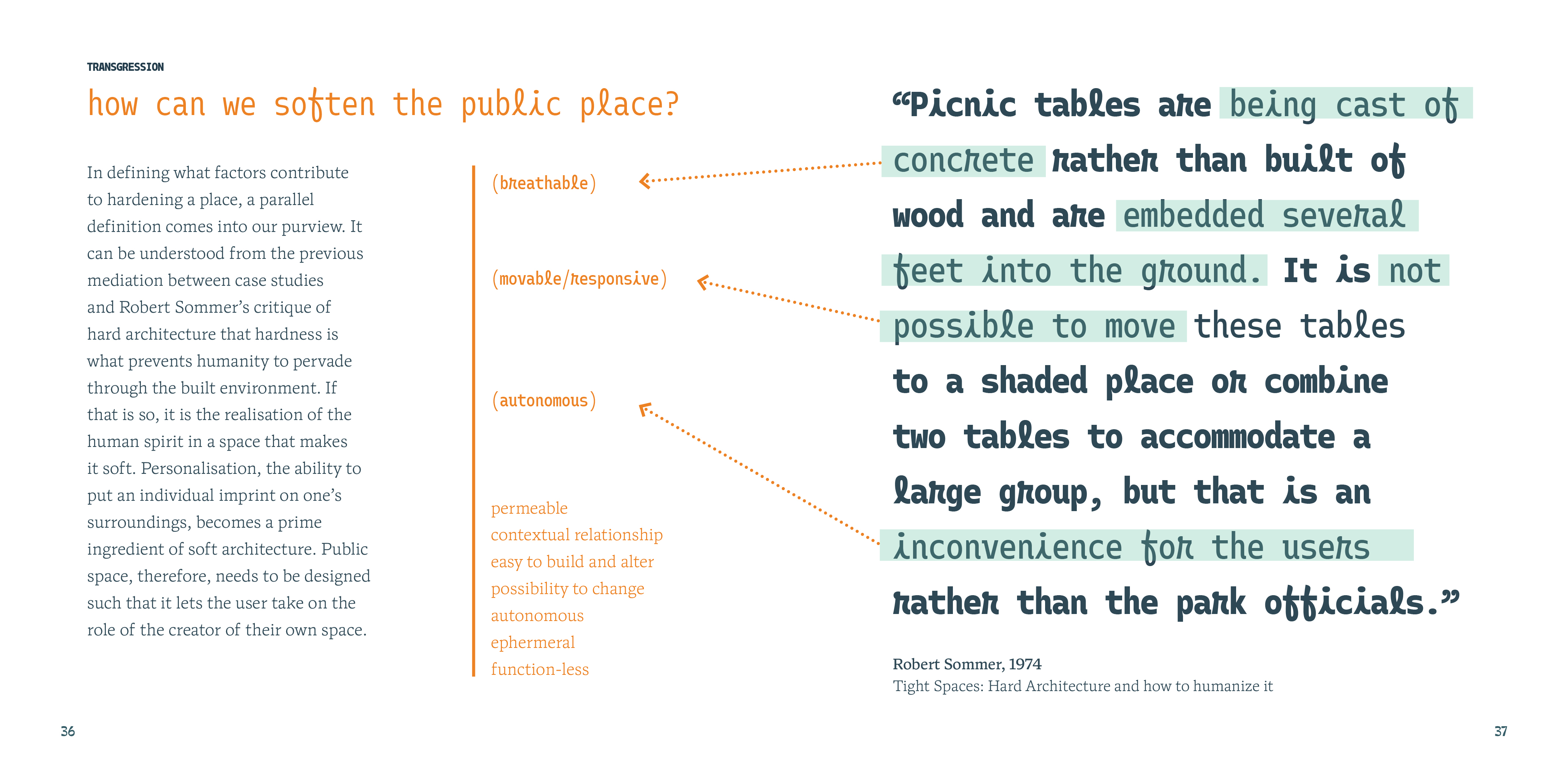
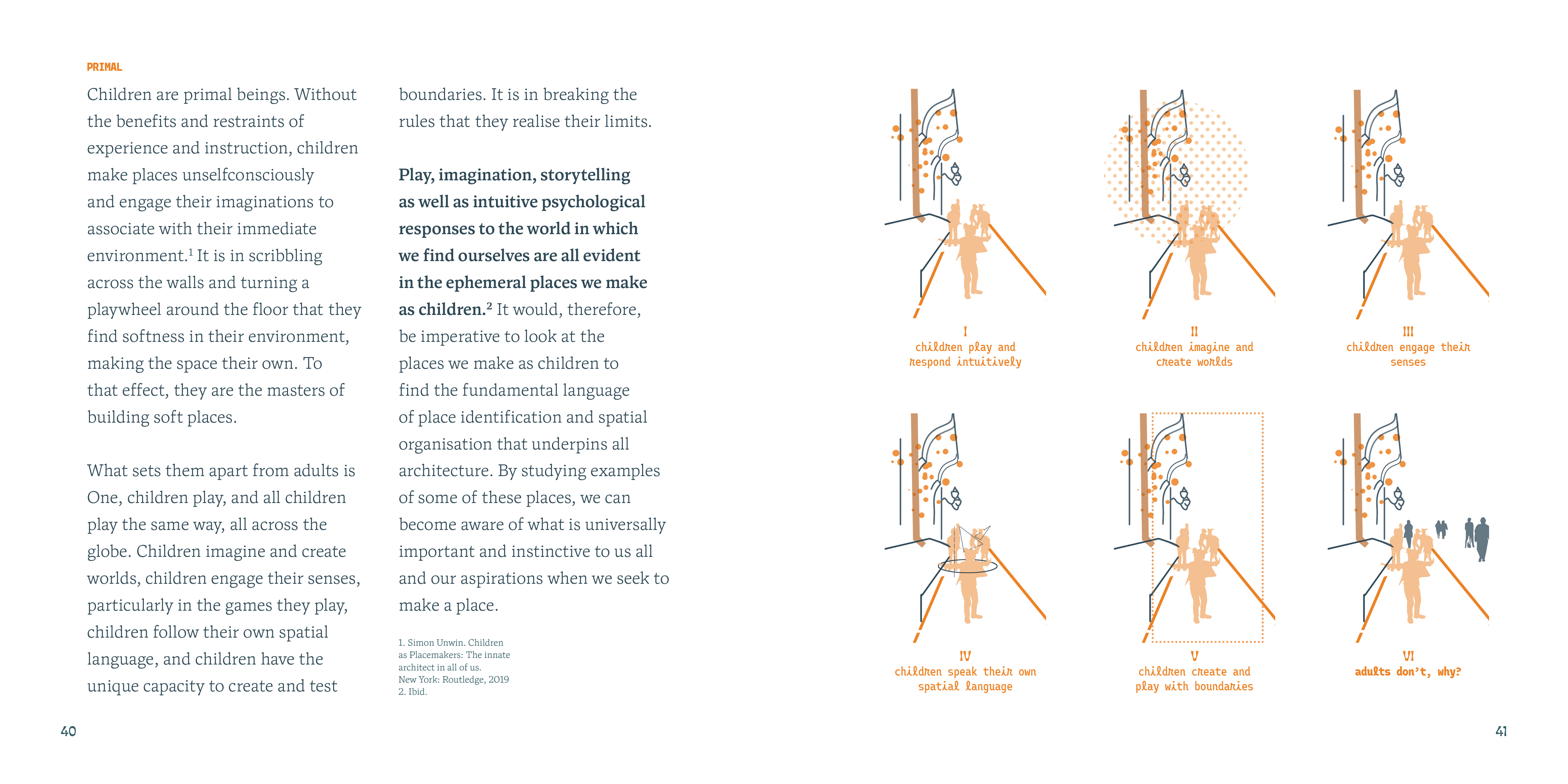
Swipe for more excerpts from the thesis book
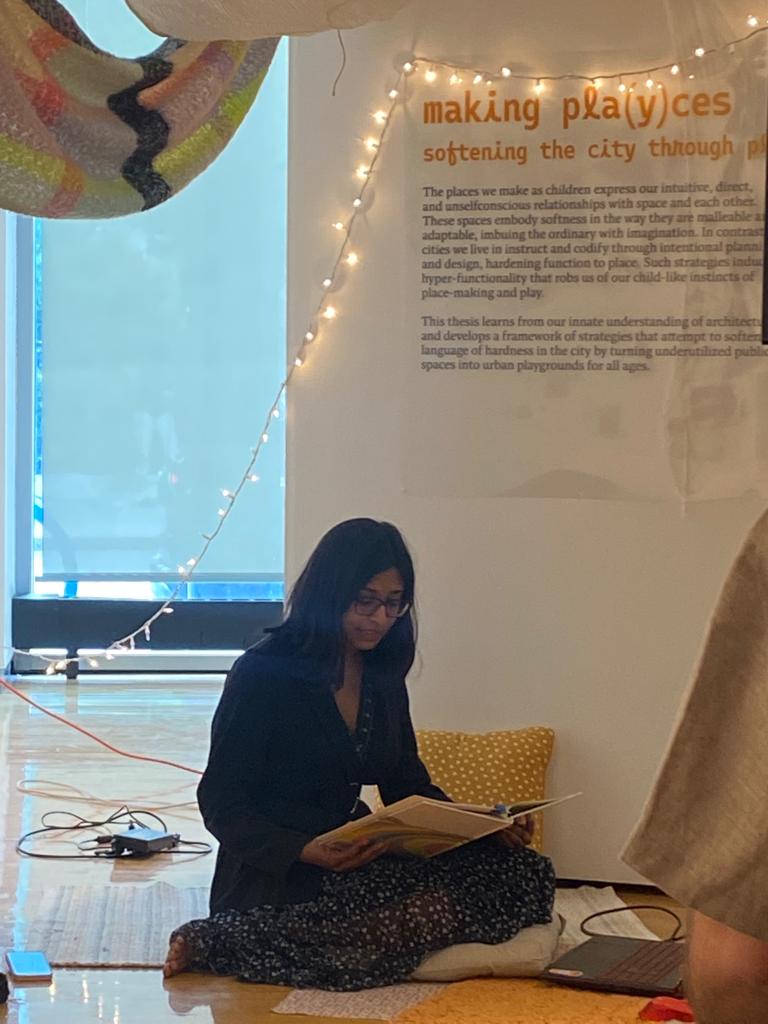
Softening thesis reviews at Sol Koffler Gallery, CIT
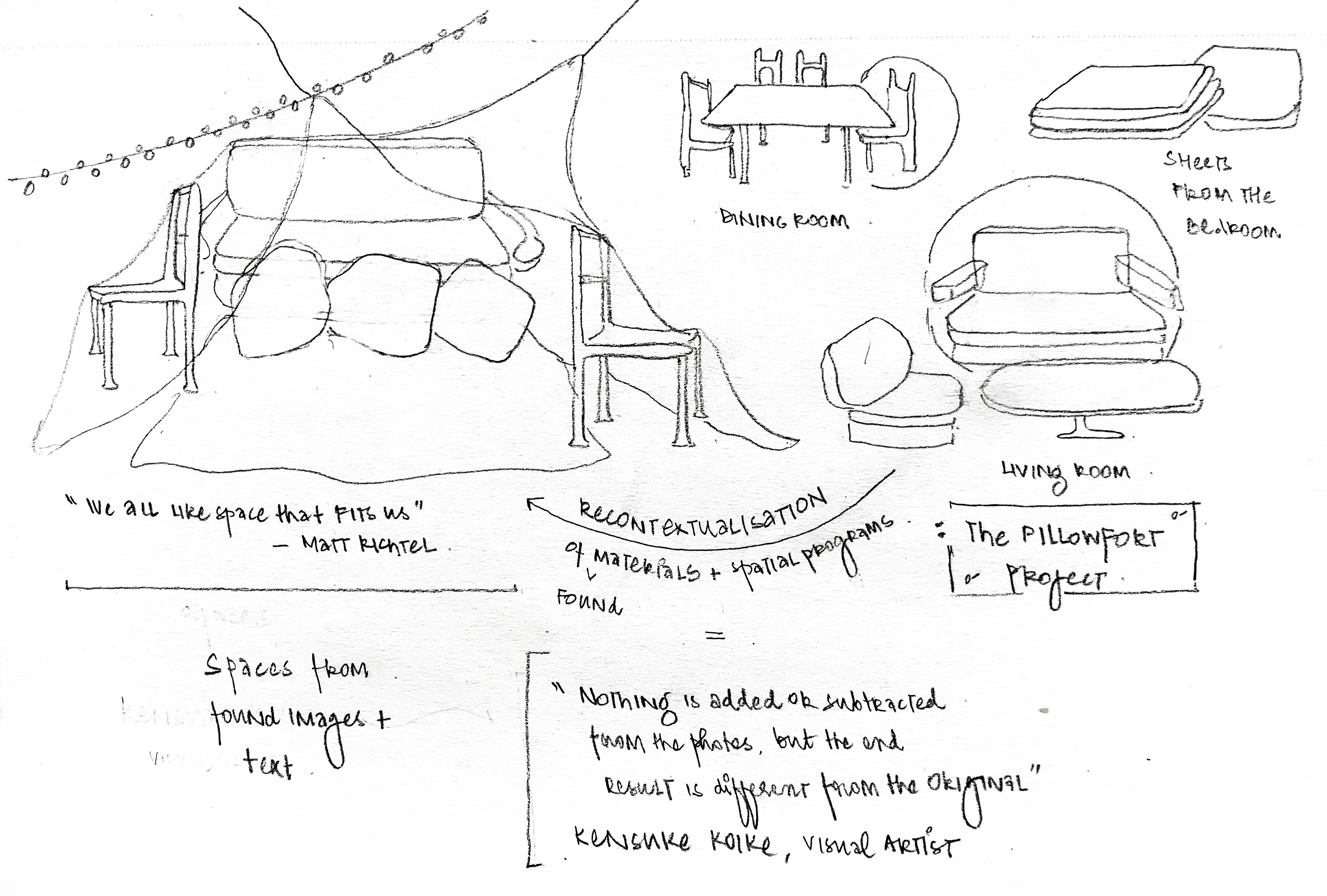
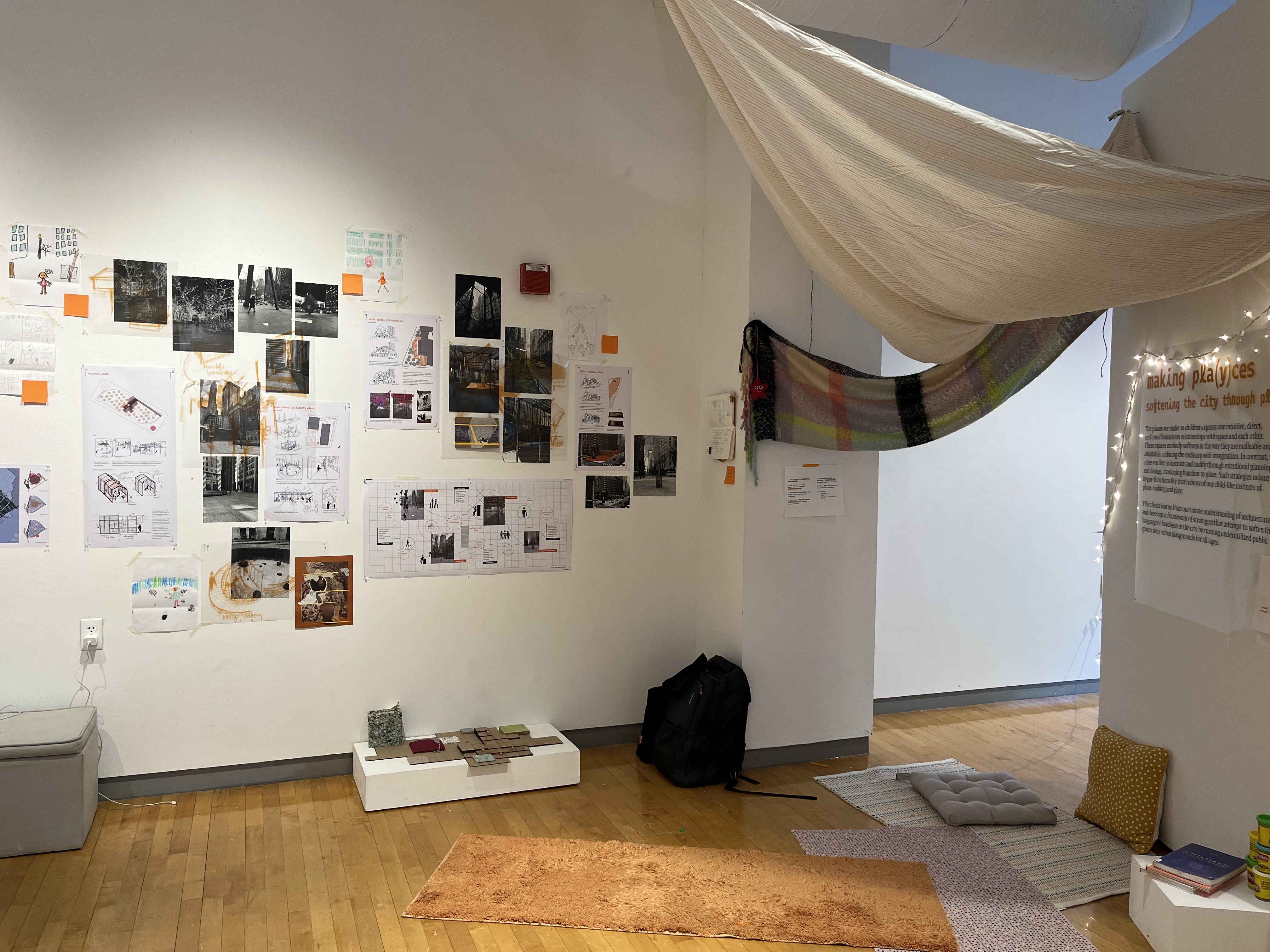
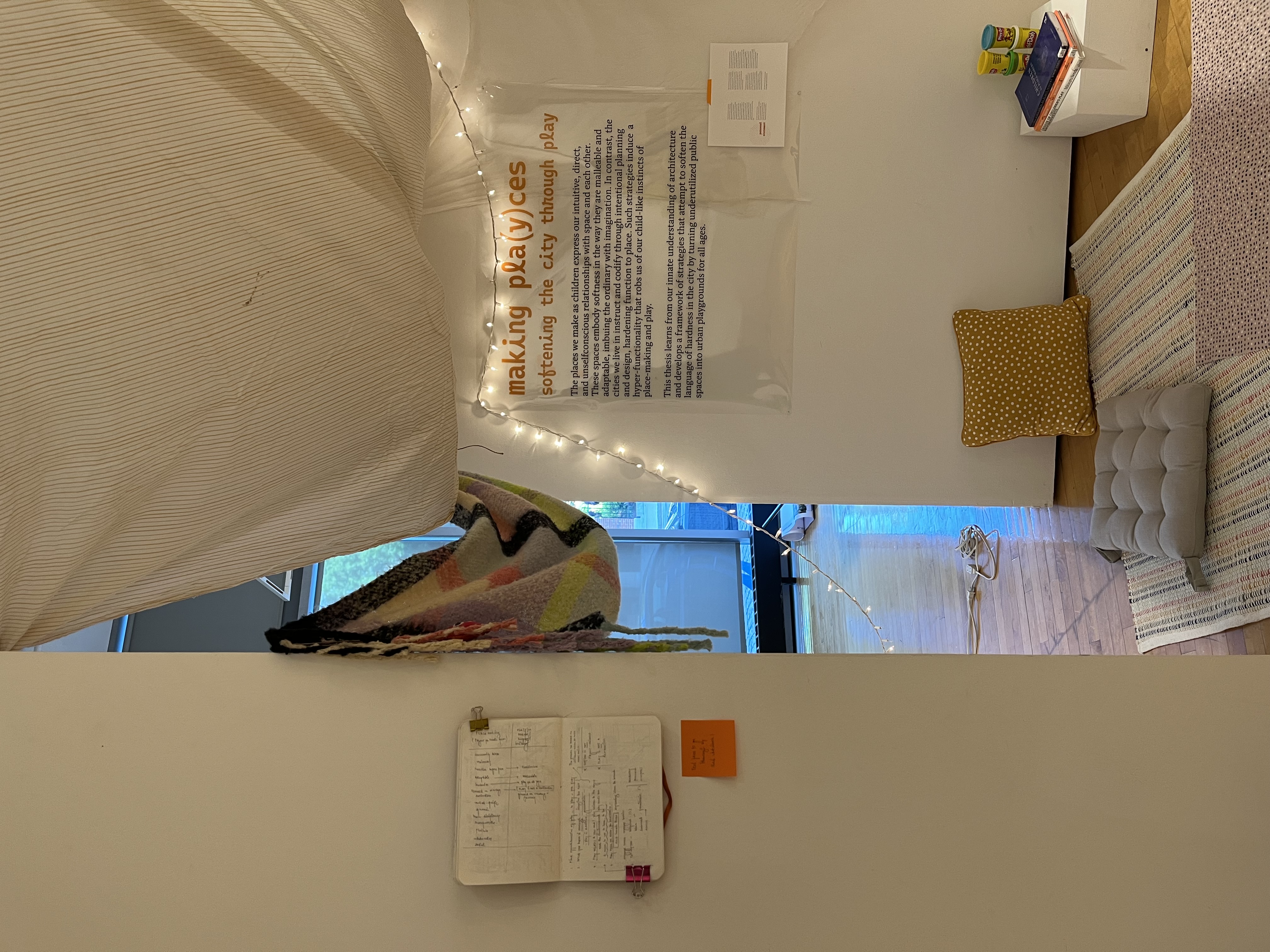
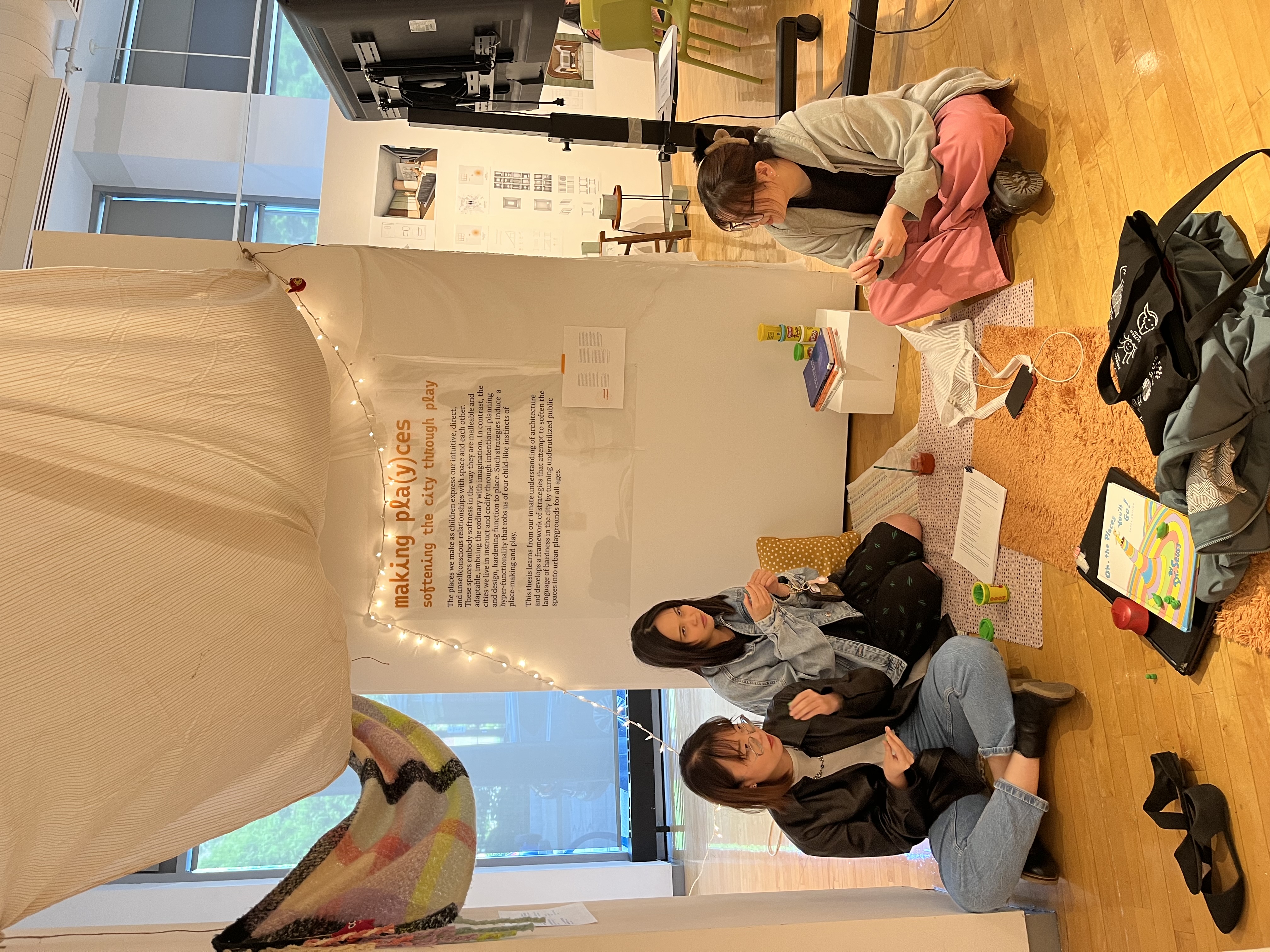
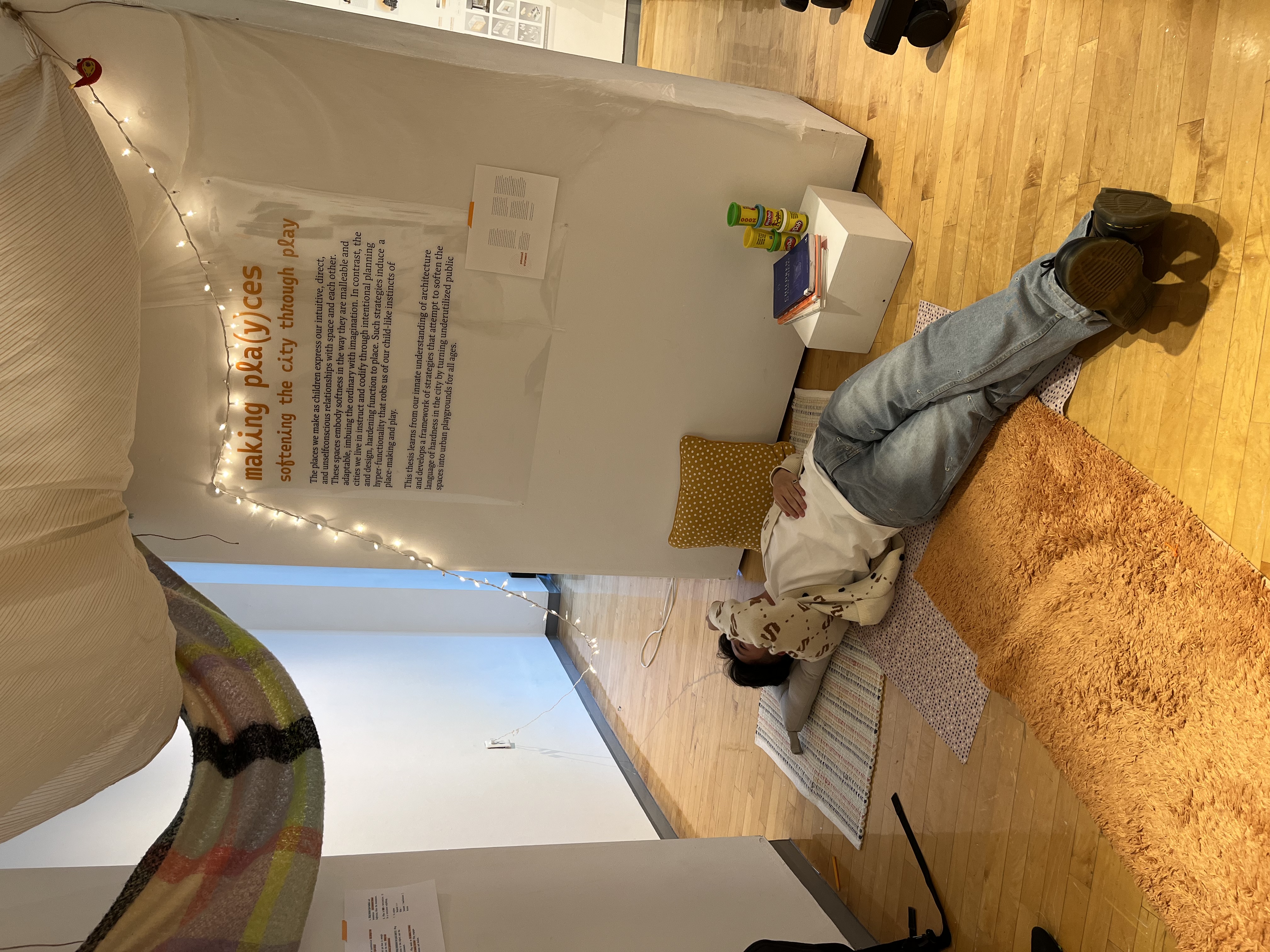
The intention with building a pillowfort for the final presentation was to soften the seriousness of the environment of a thesis review. A small alcove was built by positioning a partition wall at an angle to my presentation wall and draping bedsheets and found fabrics from the ceiling. The space was made cozier with cushions, carpets and fairylights. This created a nook for anyone to sit and make their own.
Though the goal was straightforward, it was in building this space, however small it was, that I realised how making pla(y)ces is always about making community. Designing might take one, but what makes it a place is the relationships people forge over stitching it into their lives and the surroundings. People build places.
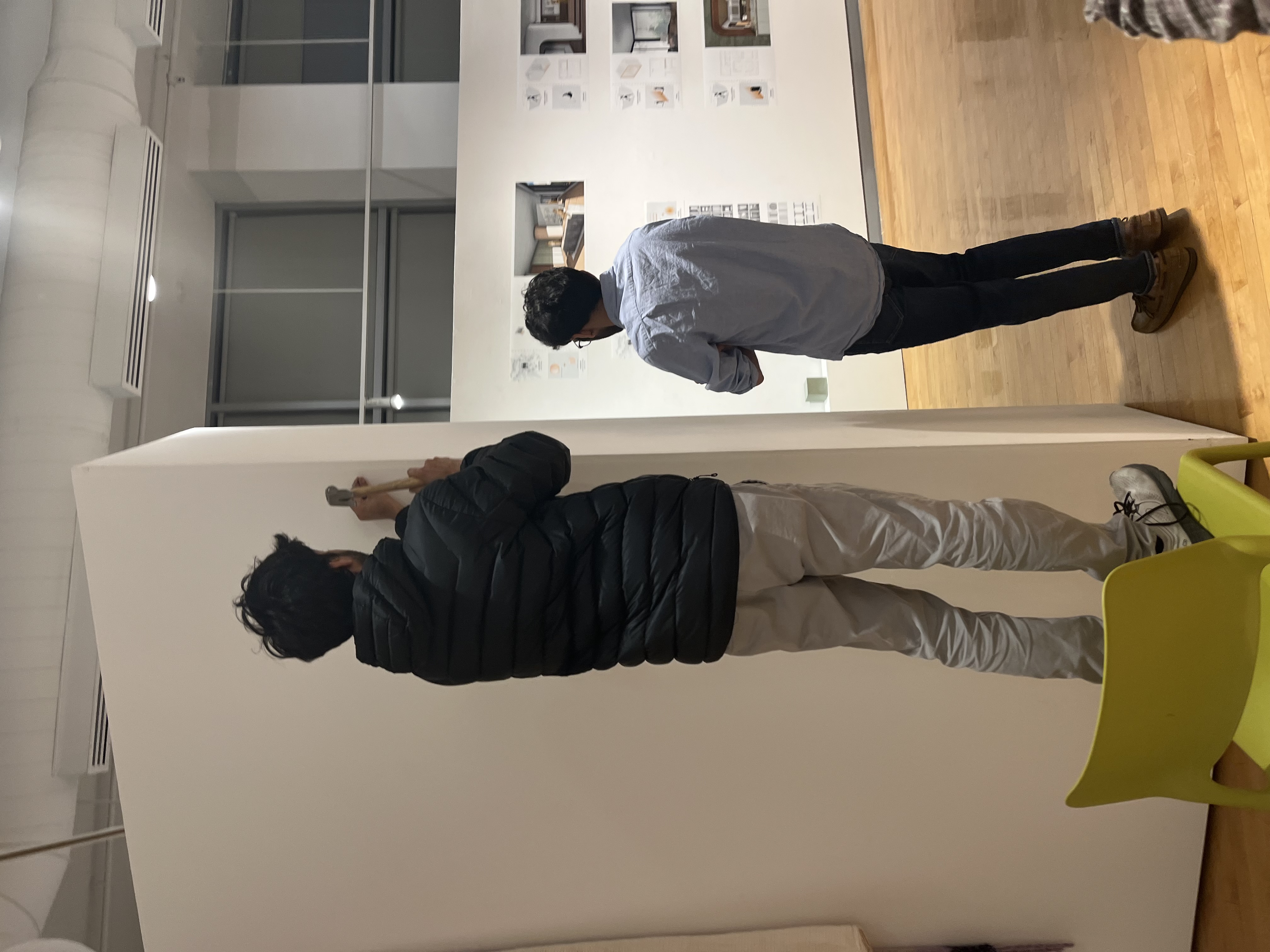
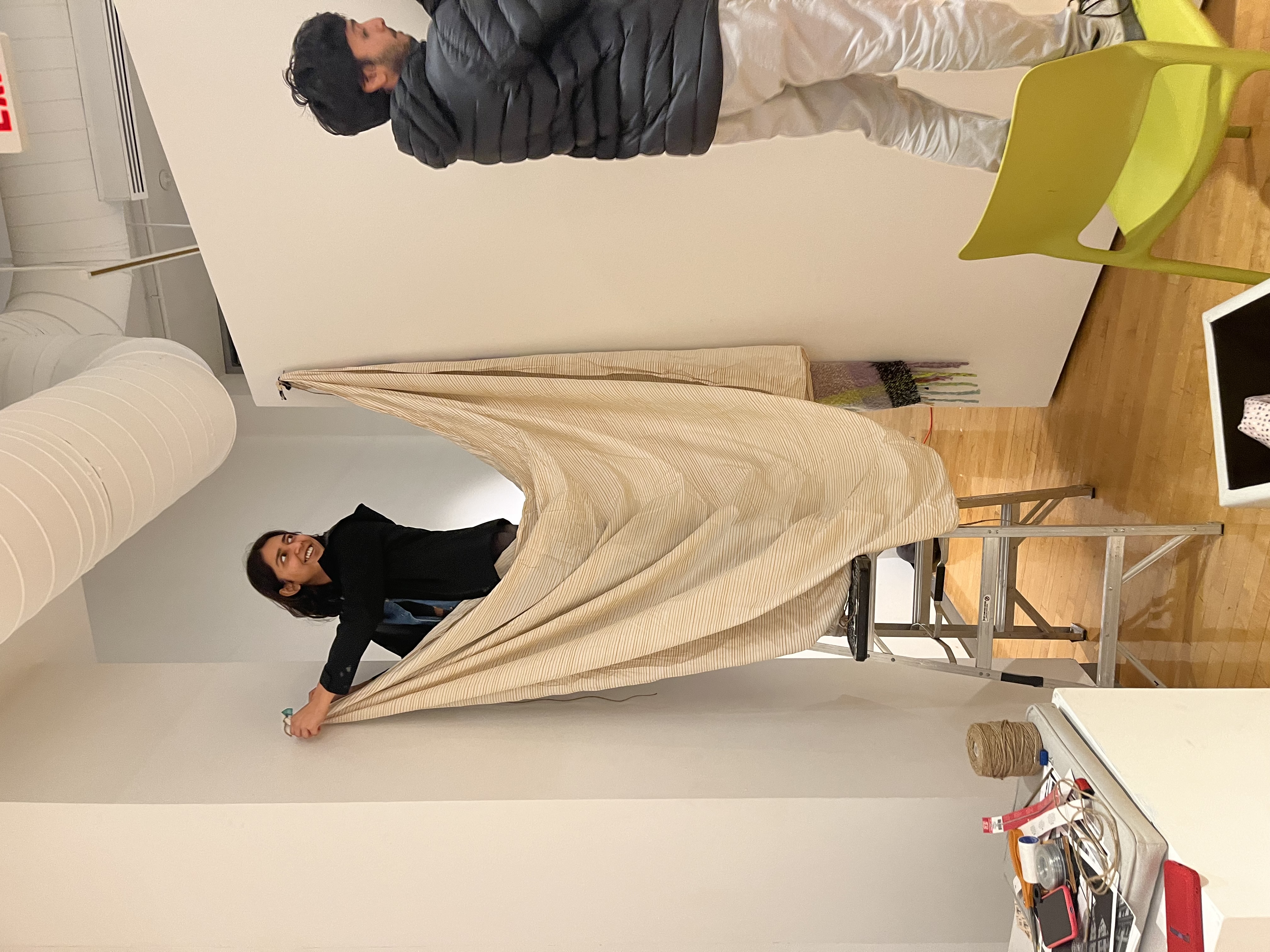

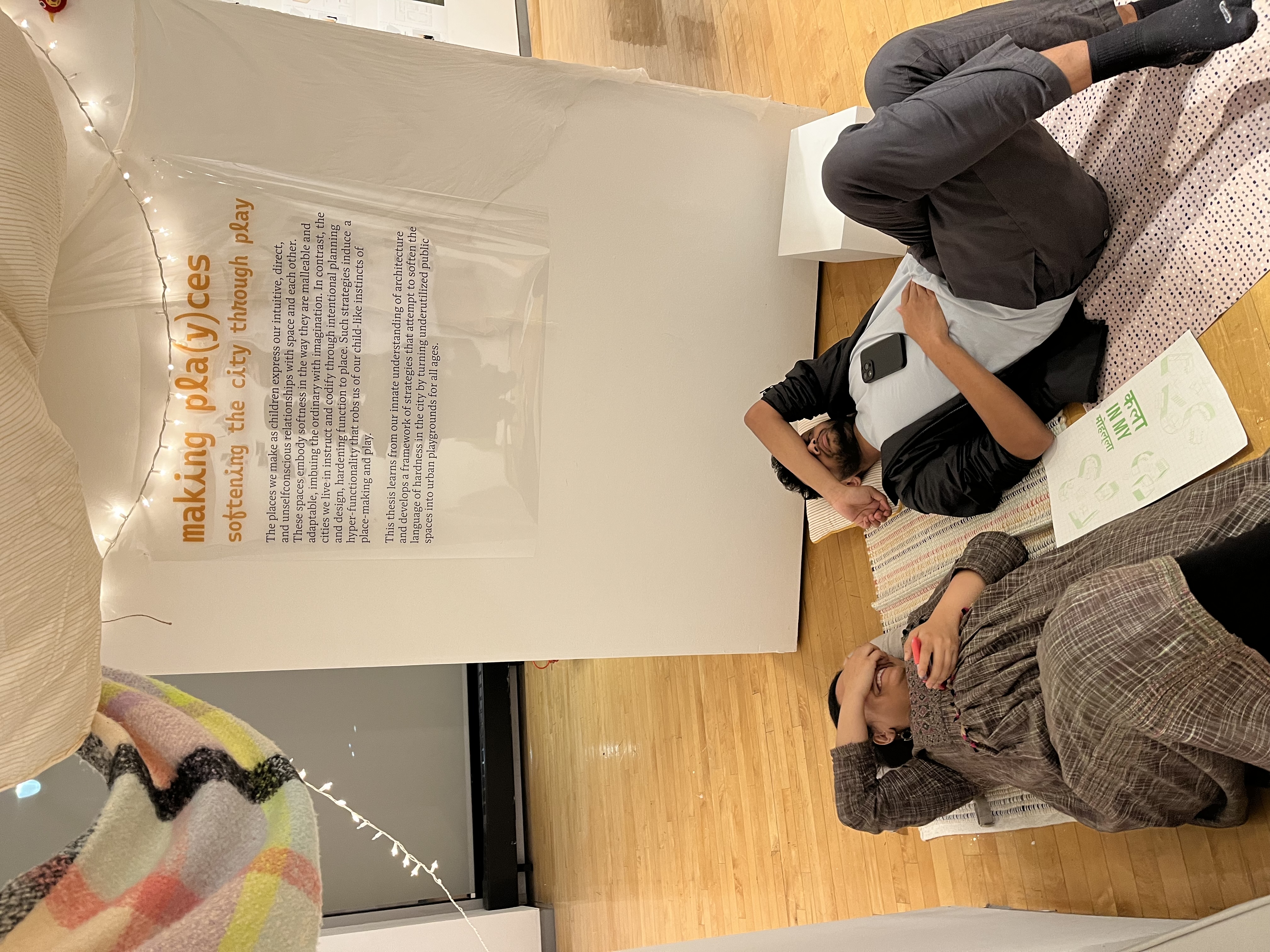
process of building the pillowfort