 scenography
Macbeth, William Shakespeare
“Shakespeare’s witches exist on the fringes of a society in which feminine attributes denote powerlessness and destruction (Duncan, Lady Macduff) and in which traditionally masculine values are equated with power. Indeed, Macbeth’s first appearance, covered with blood and receiving high praise for the slaughter of others, gives us our first idea about the acceptable patterns of behaviour, which govern the “masculine” side of this world. As Macbeth’s “partner of greatness” (1.5.10), Lady Macbeth’s “sacrifice of her womanliness” to echo Freud- “unsex me here”- further highlights the importance of the acceptance of traditionally masculine qualities in order to achieve power in the play.”
Dr. Caroline Cakebread, Macbeth and Feminism
![]()
![]()
![]()
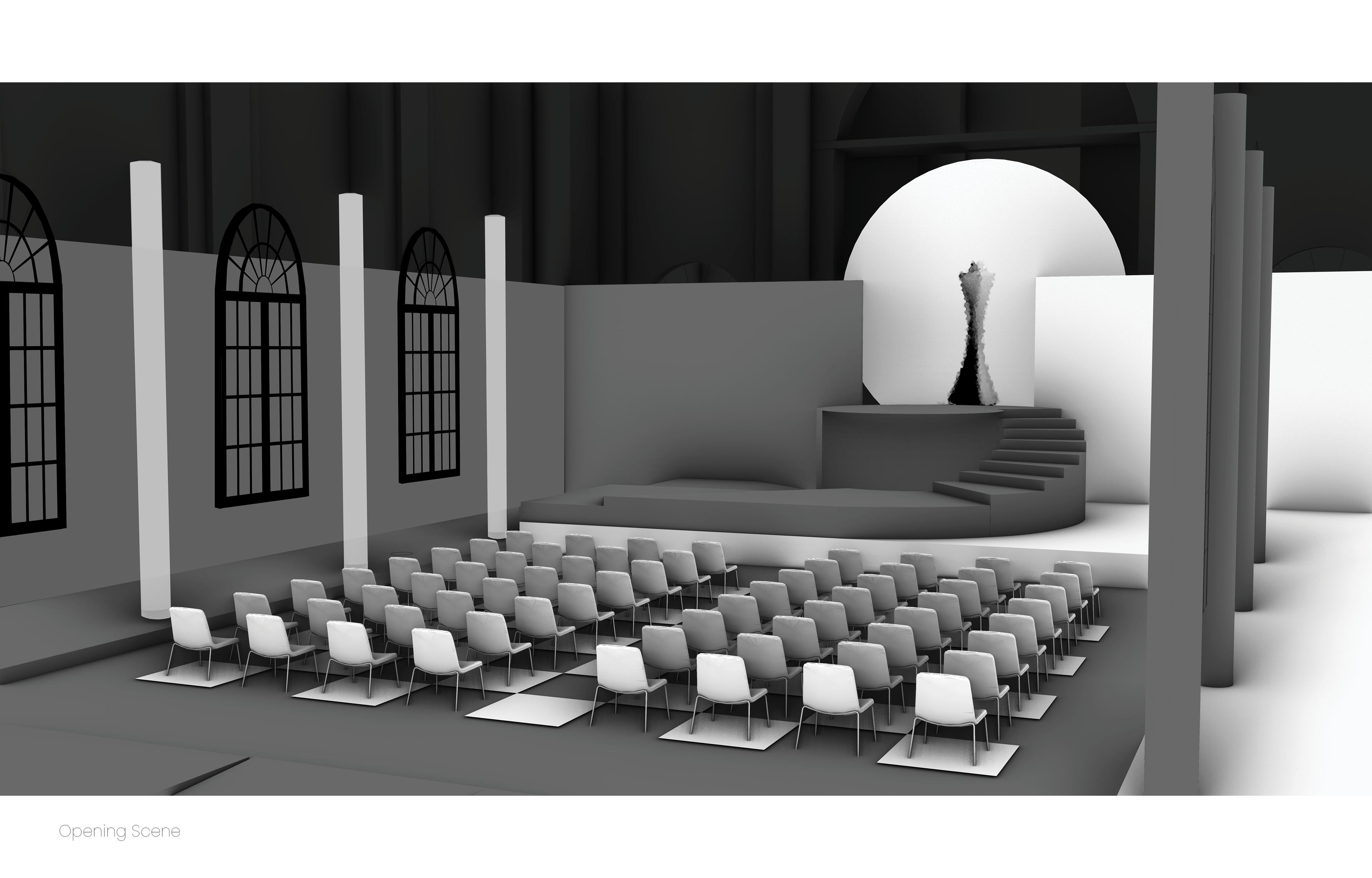
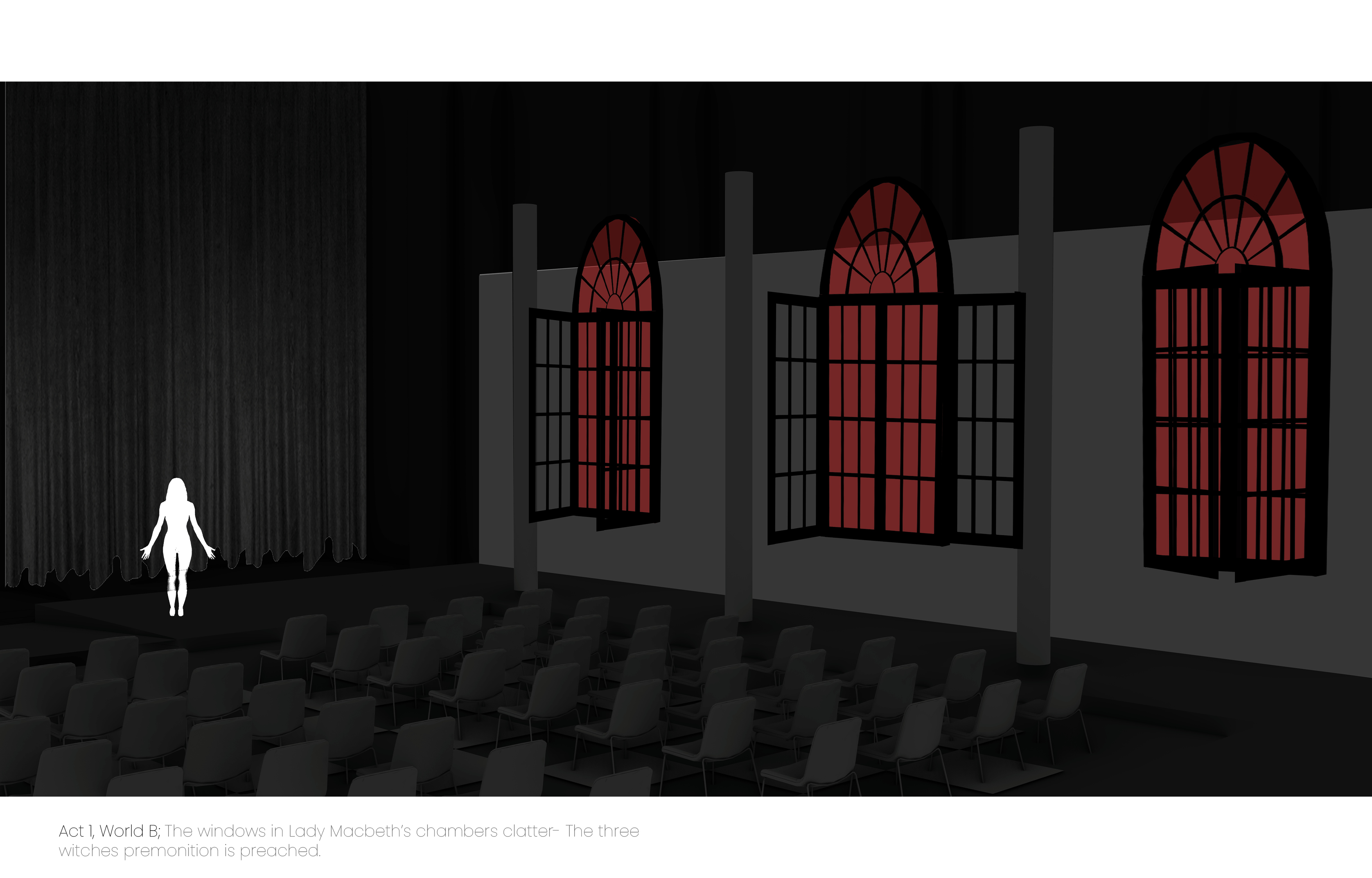
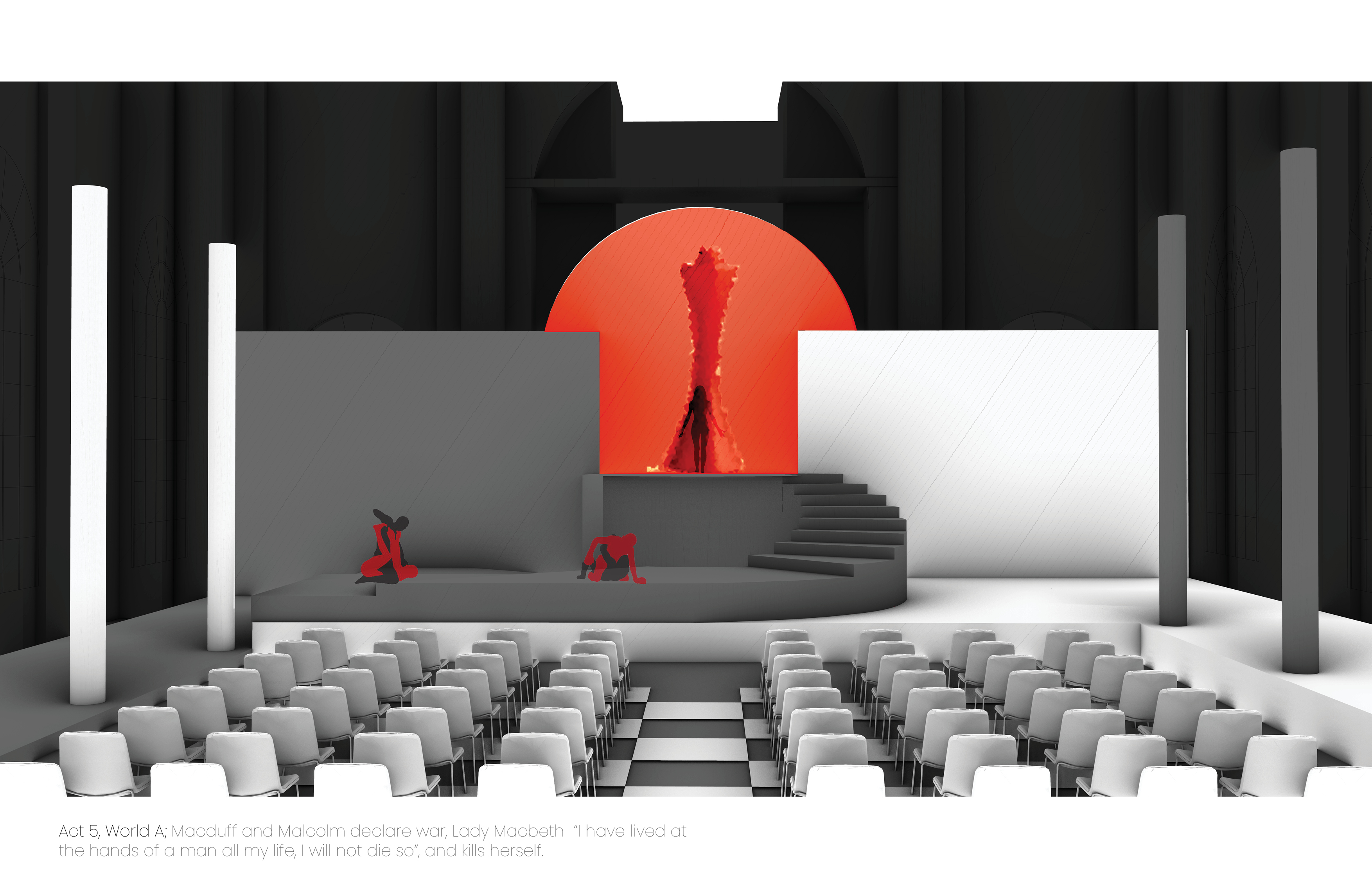
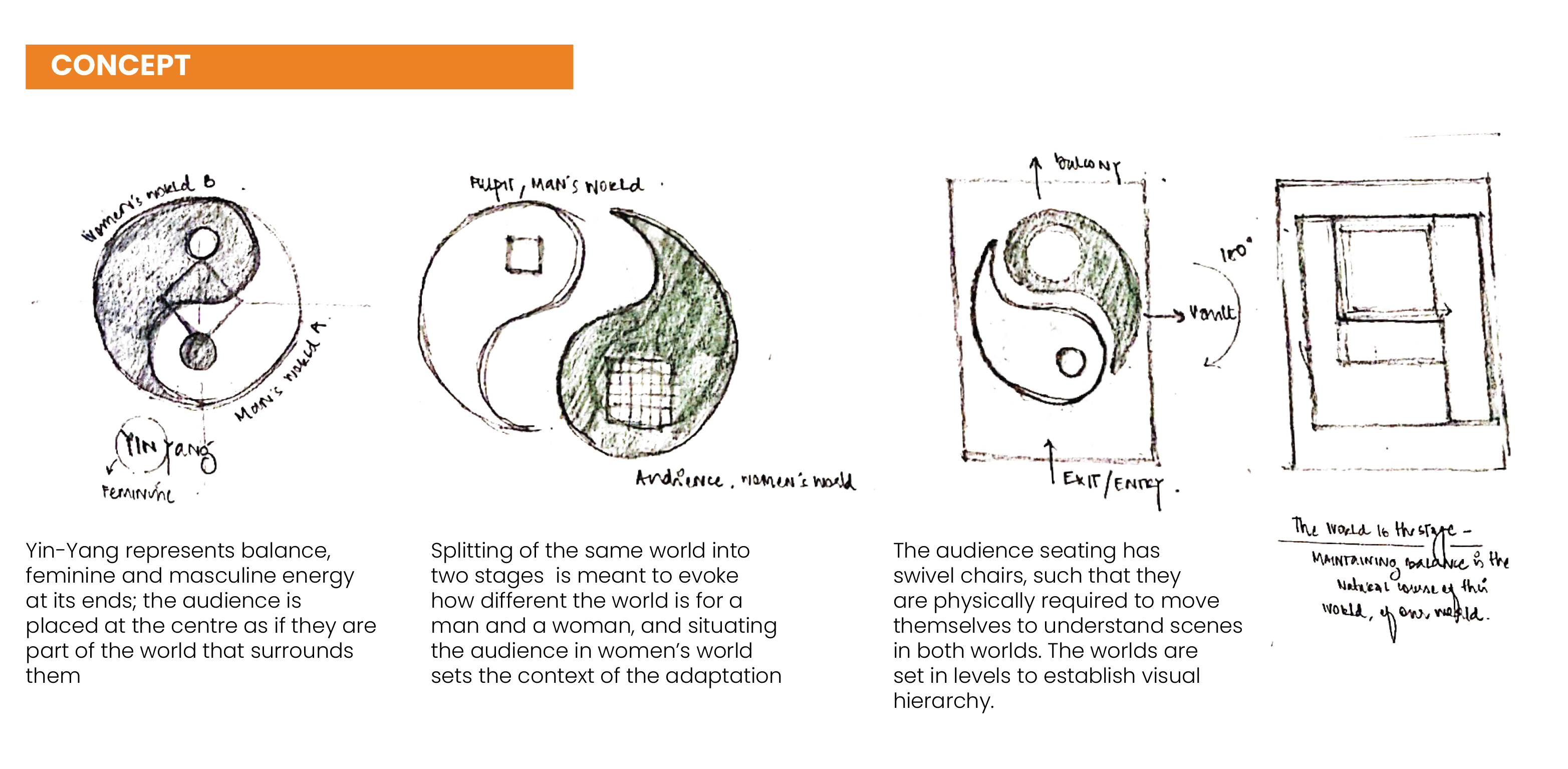
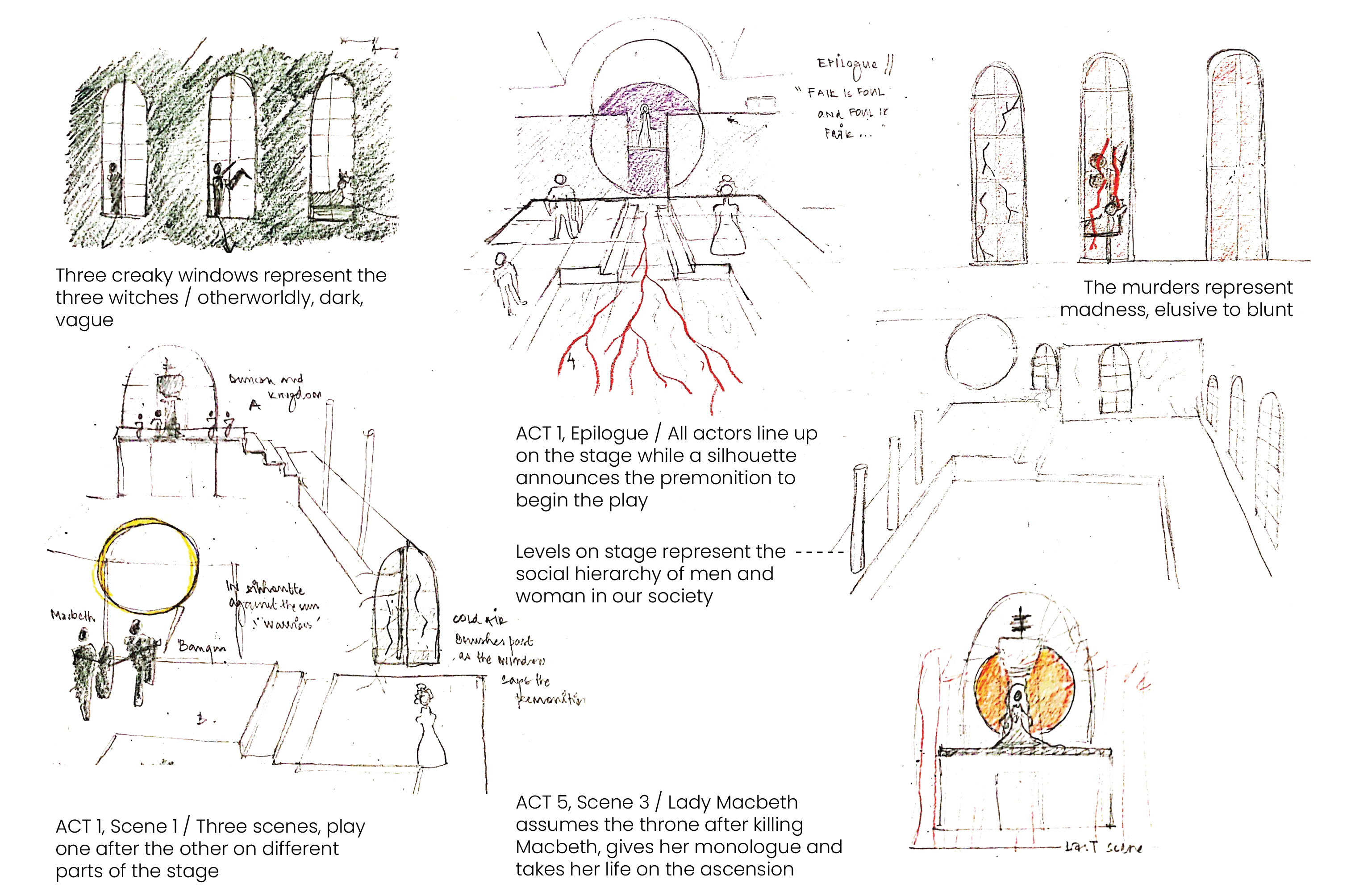
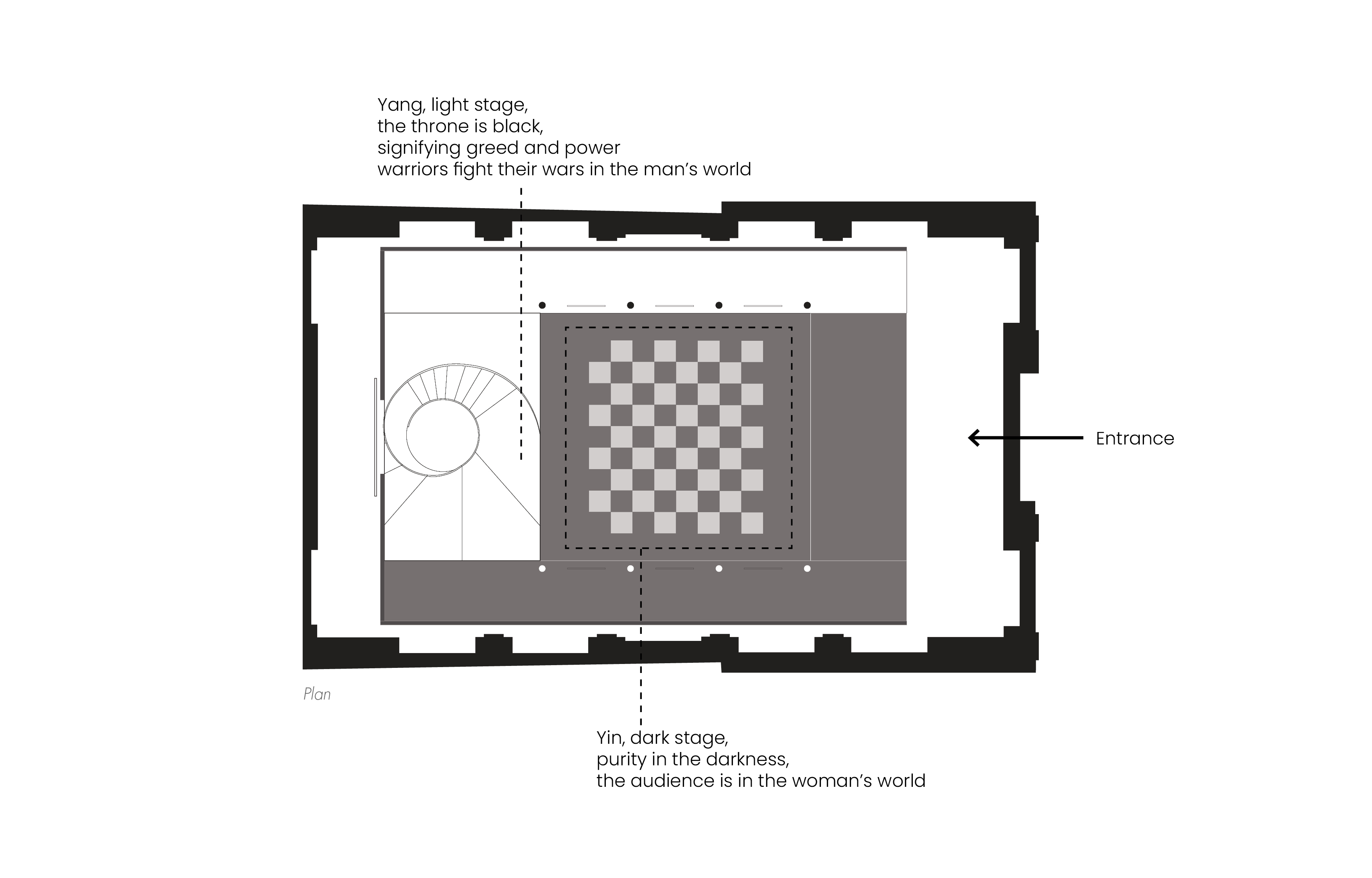
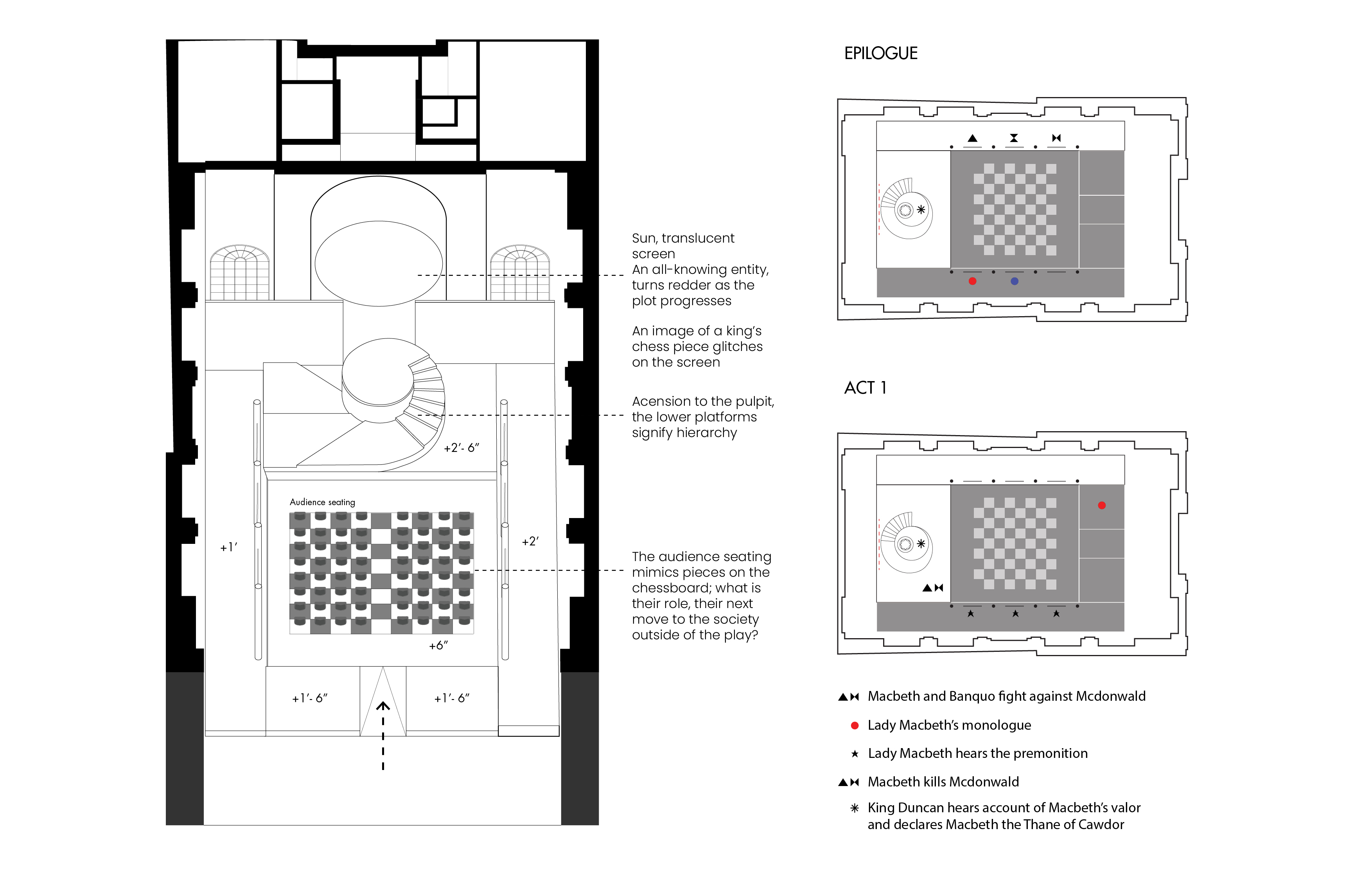
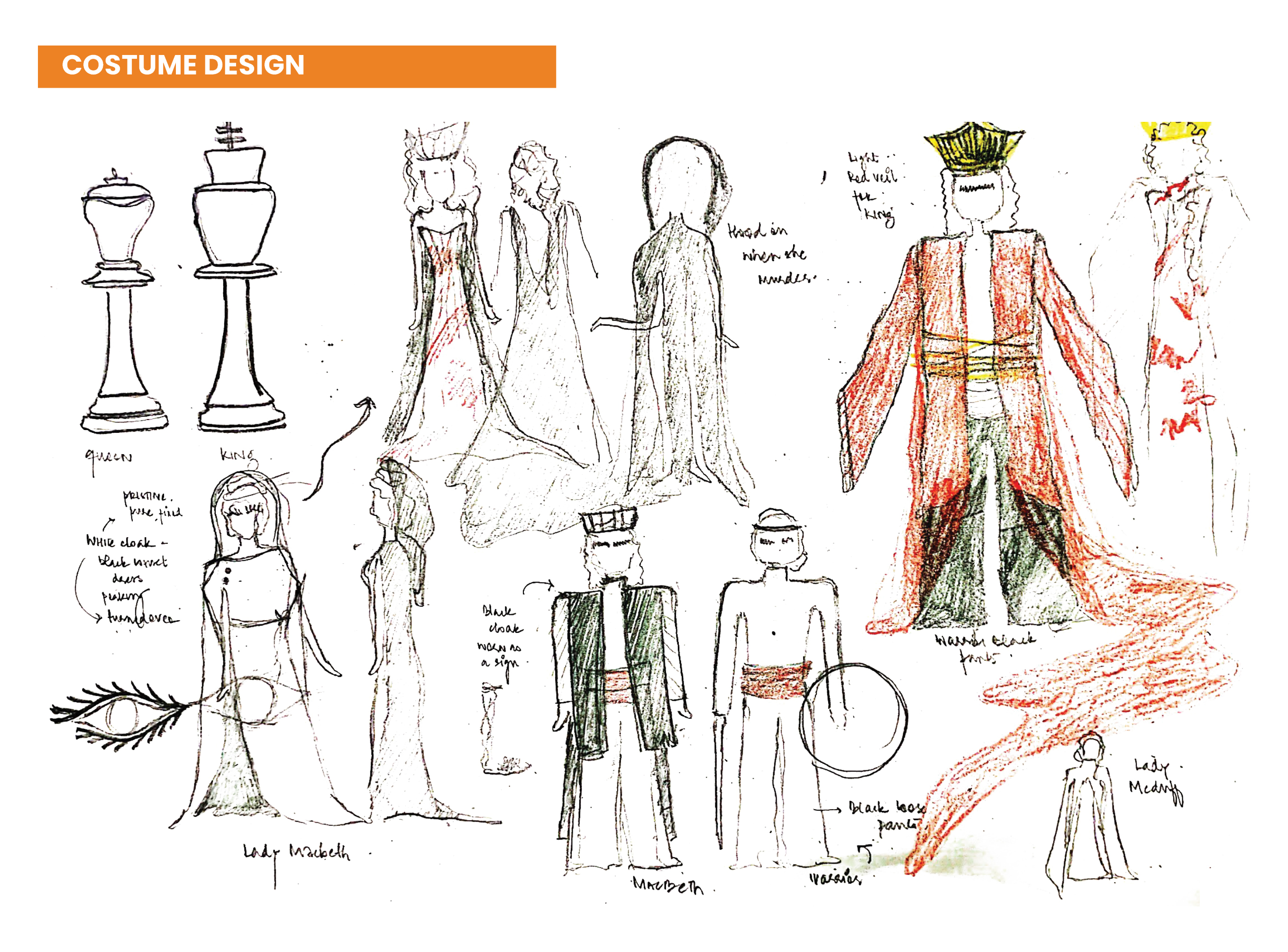
The great story of Macbeth is adapted to become a retelling of the society we live in. Borrowing from art and media references such as Lady Macbeth (2016), Parasite (2019) and Toyin
Ojih Odutola’s A Countervailing Theory (2021), the story is rewritten to situate it from the point of view of Lady Macbeth.
program scenography - academicprofessor Sara Ossanaplace Rhode Island School of Design, Providence, RI
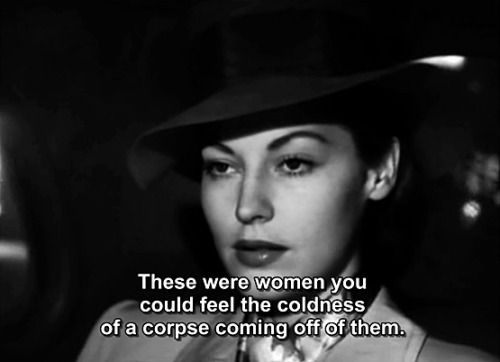
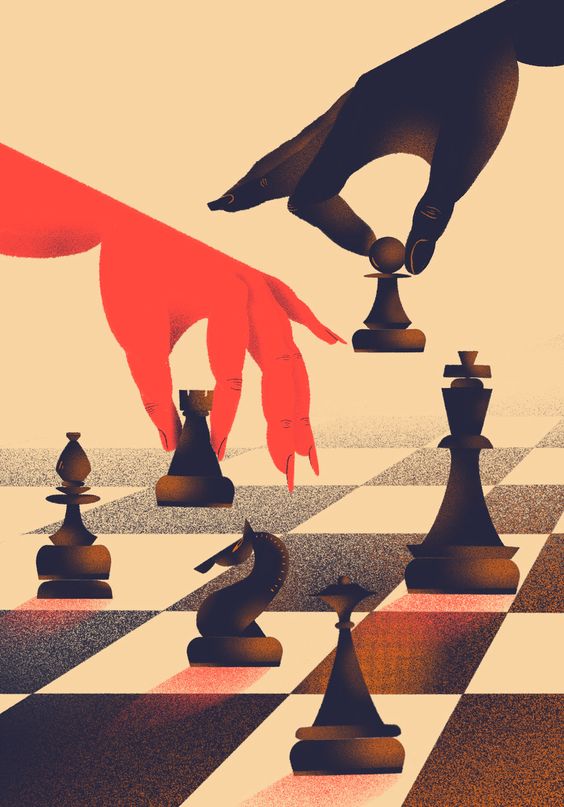
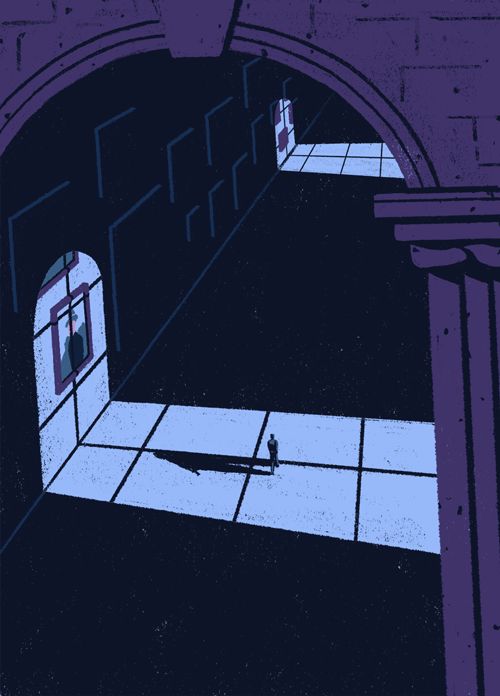
The great story of Macbeth is adapted to become a retelling of the society we live in. Borrowing from art and media references such as Lady Macbeth (2016), Parasite (2019) and Toyin
Ojih Odutola’s A Countervailing Theory (2021), the story is rewritten to situate it from the point of view of Lady Macbeth.
program scenography - academic
professor Sara Ossana
place Rhode Island School of Design, Providence, RI